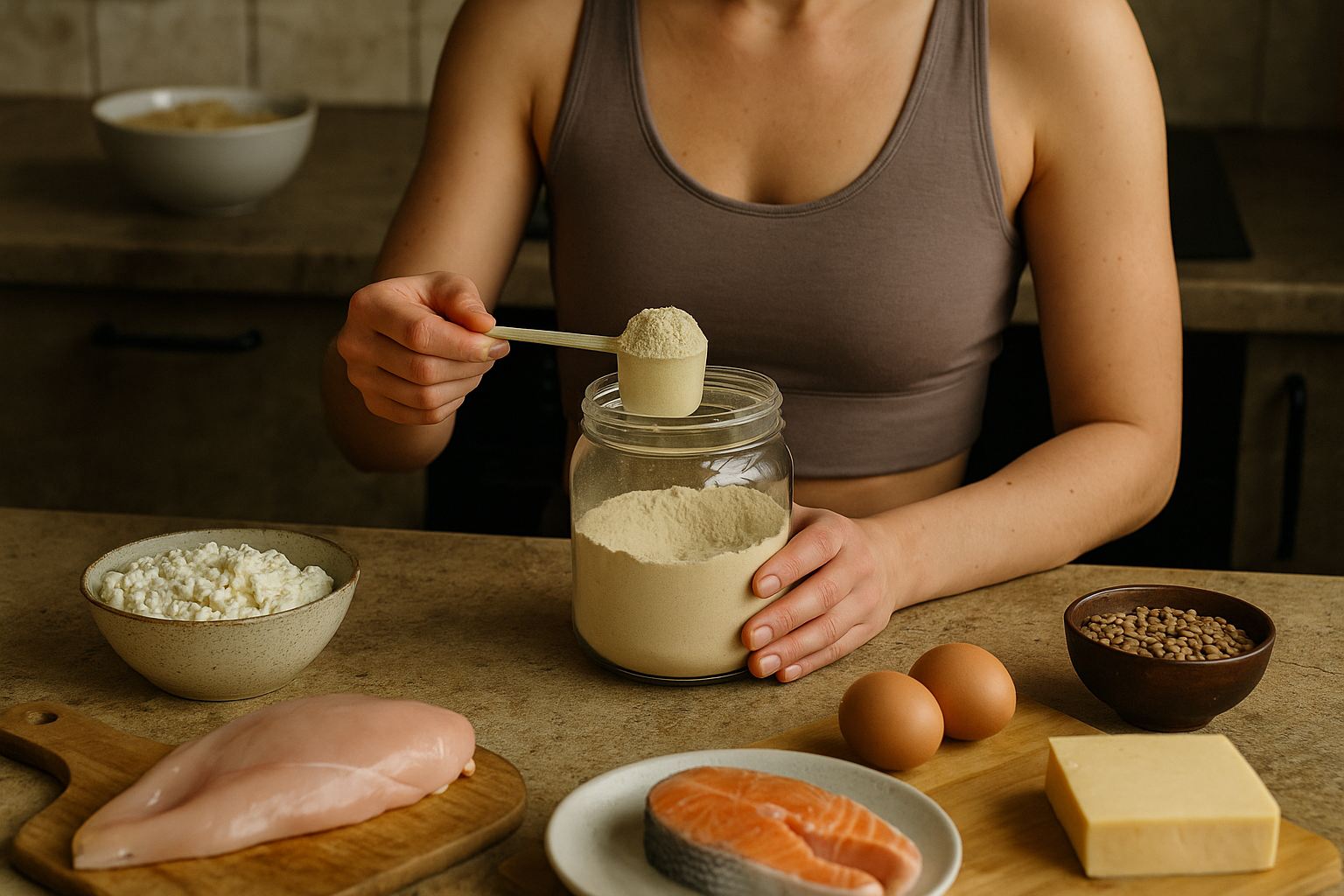
What is protein?
Proteins are chains of amino acids. The body can make some amino acids, while essential amino acids must come from the diet. Dietary protein supplies both essential and non-essential amino acids used to build and renew proteins throughout the body.
What does protein do?
Protein contributes to the structure and function of muscle, enzymes, transport proteins, immune components and many other tissues. The body is constantly breaking down and synthesising proteins, so dietary intake provides raw material for this turnover.
Protein and resistance training
Resistance exercise stimulates muscle protein remodelling. Consuming adequate dietary protein supports adaptation to training. A large meta-analysis of resistance-training studies found that protein supplementation can augment gains in muscle mass and strength when total protein intake would otherwise be lower, with diminishing additional benefit around an average total intake of roughly 1.6 g/kg/day in the studied populations.
This is not a universal prescription for every person. Needs vary with training, total energy intake, age and goals.
How much protein do active adults need?
The general adult reference intake is lower than amounts commonly used in sports nutrition. Position stands for exercising individuals commonly describe roughly 1.4–2.0 g/kg/day as sufficient for many active adults, with context determining where someone falls within that range.
People in an energy deficit, older adults and athletes with high training demands may need more individualised planning. Medical conditions can also change what is appropriate.
Protein quality
Protein sources differ in essential-amino-acid profile and digestibility. A varied diet can meet requirements from animal foods, plant foods or a combination. People eating entirely plant-based diets can combine varied sources across the day rather than trying to create a “perfect” protein combination at every meal.
Food sources
| Type | Examples |
|---|---|
| Animal-derived | Fish, poultry, eggs, milk, yoghurt, lean meat |
| Plant-derived | Beans, lentils, tofu, tempeh, soy foods, peas |
| Convenient additions | Greek-style yoghurt, cottage cheese, canned fish, edamame |
| Supplements | Whey, casein, soy, pea and blended protein powders |
Does protein timing matter?
Total daily intake is the foundation. Distributing protein across several meals can be a practical way to provide repeated opportunities for muscle protein synthesis, but there is no need to treat a tiny post-workout window as a deadline.
For most recreational lifters, a protein-containing meal within a reasonable period around training is sufficient when daily intake is adequate.
Protein supplements
Protein powder is a convenient food product, not a requirement. It can help when appetite, schedule or food preferences make a target difficult to reach. Whole foods can also provide protein alongside other nutrients.
Can more protein always build more muscle?
No. Once intake is sufficient, simply adding more protein does not bypass the need for progressive resistance training, adequate energy and recovery. Training provides the stimulus; nutrition supports the adaptation.
Protein during weight loss
Higher-protein diets can help some people with satiety and can support retention of lean mass when combined with resistance training during an energy deficit. The appropriate intake still depends on the individual and overall diet.
Common mistakes
- Focusing on supplements before total food intake.
- Assuming one meal can compensate for chronically low intake.
- Believing protein alone builds muscle without training.
- Ignoring carbohydrate, fat, fibre and micronutrients because protein is the current priority.
- Using a bodybuilder’s intake as a universal requirement.
FAQs
Do I need protein powder?
No. It is simply a convenient way to add dietary protein.
Is plant protein enough?
Yes, a well-planned plant-based diet can provide adequate protein and essential amino acids through varied sources.
Do I need protein immediately after training?
No narrow emergency window exists. Total daily intake and a sensible distribution across the day are more important.
Can the body absorb more than 30 grams at once?
The body can digest and absorb larger meals. The amount that maximally stimulates muscle protein synthesis at one time is a different question from whether protein is absorbed.