Start with the training week
Before planning individual foods, look at when you train, which sessions are hardest and when meals are realistically available. A long endurance session has different fuelling demands from a rest day or a short strength workout.
Cover total energy first
Consistently under-eating can make recovery and performance harder. Consistently eating beyond requirements can also conflict with body-composition goals. Exact calorie tracking is optional; regular meals, portions and body-weight/performance trends can also provide useful feedback.
Include a protein source
Distributing protein-containing foods across the day is a practical way to support muscle protein turnover. Options include fish, eggs, poultry, lean meat, dairy, tofu, tempeh, beans, lentils and suitable protein supplements when convenience is useful.
Scale carbohydrate to activity
Carbohydrate requirements rise with training volume and intensity. Rice, potatoes, oats, bread, pasta, fruit, beans and other carbohydrate-rich foods can be increased around demanding training and adjusted downward when needs are lower.
Include dietary fat
Foods such as olive oil, nuts, seeds, avocado and oily fish can contribute essential fatty acids and fat-soluble nutrients. Very high-fat meals immediately before hard exercise may be uncomfortable, so timing can matter.
Build meals with a flexible template
A simple main meal can combine a protein-rich food, a carbohydrate source, vegetables or fruit, and an appropriate fat source. Portion sizes should reflect appetite, body size, training demand and goals rather than a universal plate prescription.
Plan around workouts
Before training, choose familiar foods that provide useful fuel without gastrointestinal discomfort. After training, a normal meal containing protein, carbohydrate and fluids is adequate for many people. Recovery nutrition becomes more time-sensitive when another demanding session follows soon.
Hydration
Regular fluids with meals and around training cover most everyday needs. Long sessions, heat and heavy sweating may require a more deliberate hydration and sodium plan.
Batch preparation without eating the same meal all week
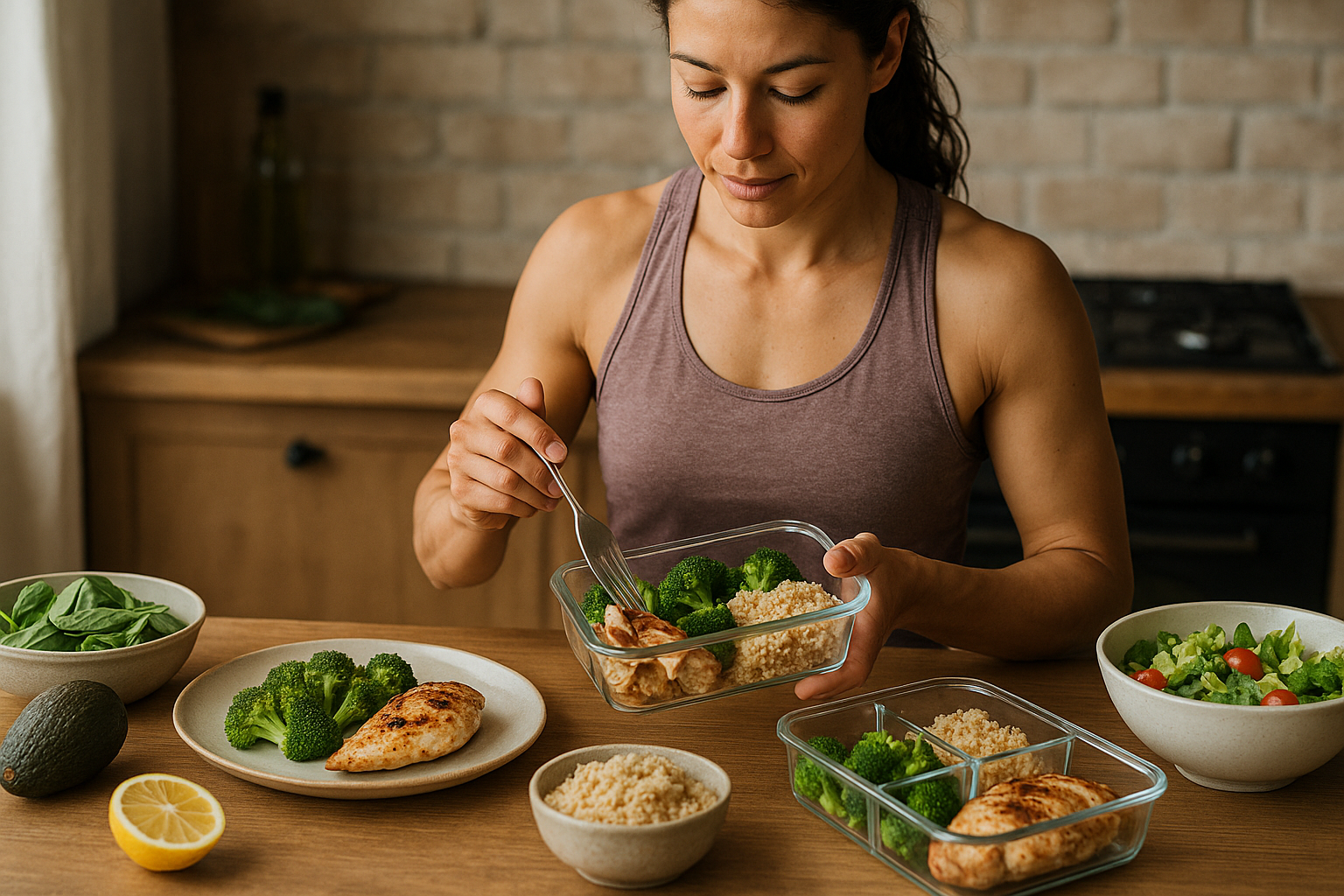
Prepare components rather than identical boxes: cook one or two proteins, a grain or potatoes, washed vegetables, fruit and a versatile sauce. Components can then be combined into different meals. Frozen vegetables, canned beans, microwave grains and pre-cooked options are legitimate convenience tools.
Snacks for active days
Useful snacks can combine carbohydrate and protein: yoghurt and fruit, milk and cereal, toast and eggs, fruit with a dairy or soy option, or a sandwich. Snacks are optional if meals already meet needs.
What if your goal is fat loss?
Meal planning can create structure without extreme restriction. Retain protein-rich foods, fruit, vegetables and other nutrient-dense choices while adjusting portions and energy-dense extras. A modest, sustainable energy deficit is generally more practical than aggressive restriction.
What if your goal is muscle gain?
A consistent training programme plus sufficient protein and energy are the foundation. Gradually increasing portions or adding an extra meal or snack can be easier than forcing very large meals.
A practical planning routine
- Map training sessions for the week.
- Choose three to five repeatable breakfasts/lunches/dinners.
- Buy core protein, carbohydrate, produce and fat sources.
- Prepare the components that save the most time.
- Keep two emergency convenience meals available.
- Review appetite, training quality and progress, then adjust portions.
FAQs
Do I need six meals per day?
No. Meal frequency can be organised around preference and schedule while still meeting overall nutrition needs.
Do I need to weigh every ingredient?
No. Weighing can improve tracking precision, but it is not required for a nutritious or performance-supporting diet.
Should rest-day meals be completely different?
Not necessarily. Some people adjust carbohydrate or total portions with activity while keeping the overall meal structure similar.
Are convenience foods incompatible with healthy eating?
No. Frozen produce, canned foods and other minimally prepared options can make a balanced diet easier to sustain.