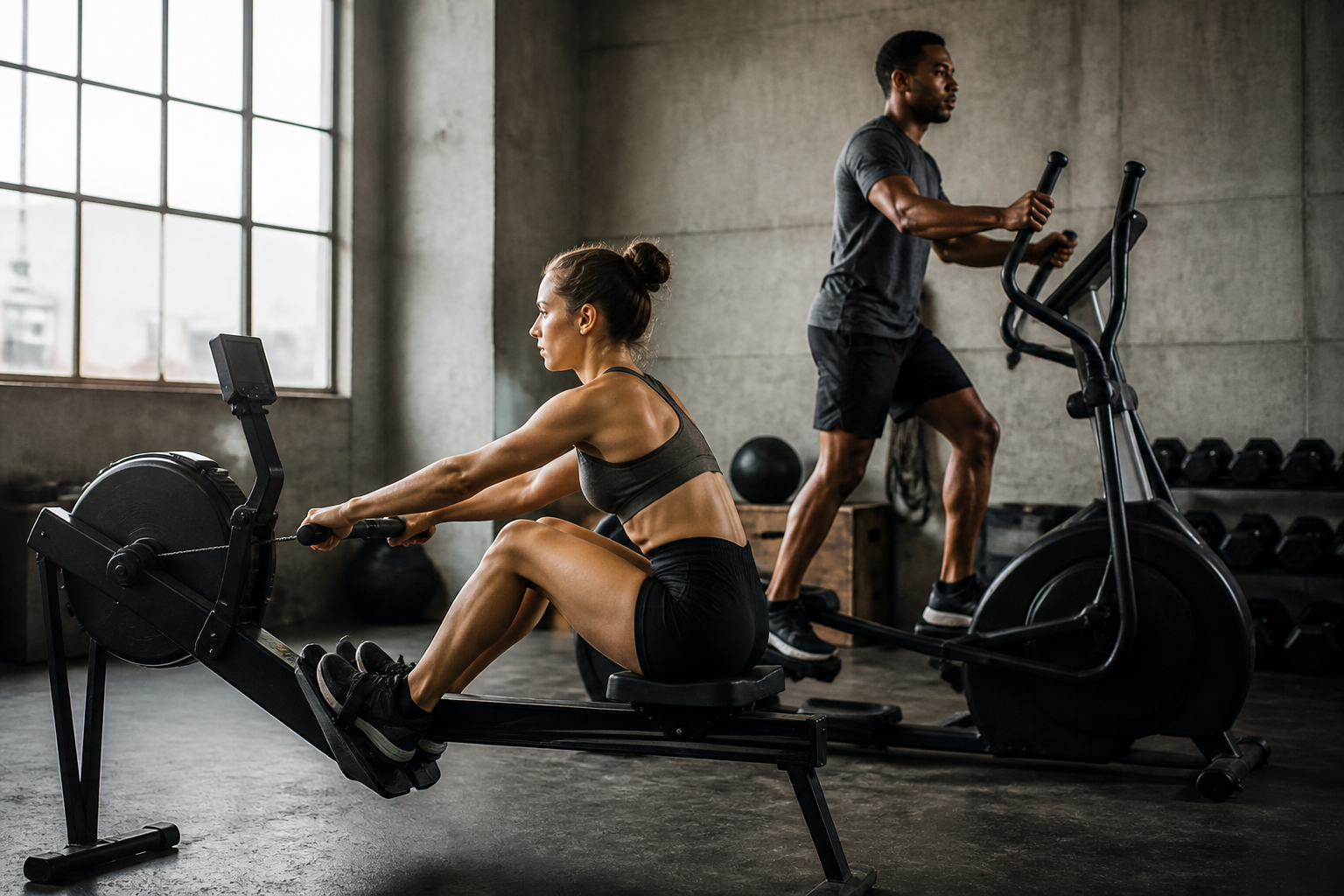
When comparing home fitness equipment, buyers often ask for a rowing machine vs elliptical trainer comparison. Both are popular choices for effective cardiovascular exercise at home, but they differ significantly in movement patterns, joint impact, muscle use, size and price. This article offers an evidence-informed guide to help you choose the best fit for your goals, space and budget, using insights from US and UK public health sources.
Rowing Machine vs Elliptical: Basics and Movement Patterns
Rowing machines simulate the action of rowing a boat. You sit on a sliding seat, strap in your feet, grasp a handle, and draw yourself back using a coordinated drive from the legs, core, and arms. The movement is continuous and rhythmic, recruiting most major muscle groups. Resistance can come from air, magnets, water, or hydraulic pistons. Users must adopt good form to avoid excessive strain on the lower back.
Elliptical trainers (also called cross trainers) provide a low-impact, weight-bearing movement. Standing upright, you move your legs in an oval or elliptical path while gripping handles that can move in sync with your arms for a full-body experience or remain stationary for lower body emphasis. This movement mimics walking, running, and stair climbing without significant impact on the joints.
Overall, rowing machines are more space-efficient but require floor clearance for full range of motion. Ellipticals stand taller and may need more vertical space and head clearance, but require less user technique than rowers.
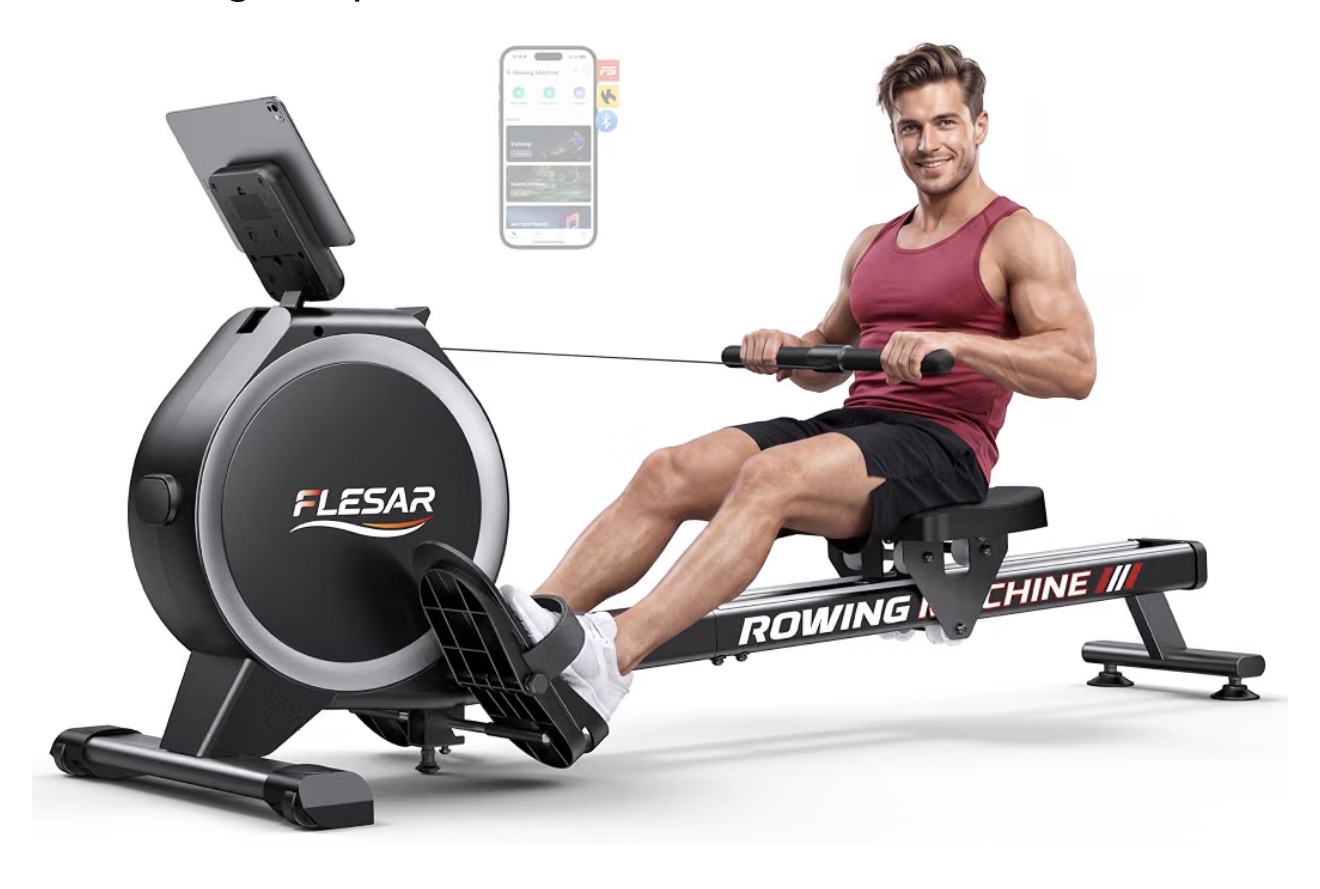
Magnetic rowing machine
Magnetic rowing machines offer full-body pulling and leg-drive exercise using adjustable magnetic resistance. Rail length, stroke feel and load rating vary by model.
Check price on Amazon
See the current price and availability on Amazon before ordering.
Affiliate link. We may earn a commission at no extra cost to you.
Evidence on Cardio Benefits and Joint Impact
Both rowing and elliptical trainers offer substantial cardiovascular benefits with regular use. According to guidelines from the Centers for Disease Control and Prevention (CDC), adults should aim for at least 150 minutes per week of moderate-intensity aerobic activity such as brisk walking or cycling. Both machines can meet these recommendations, supporting heart health, improved sleep, and function (CDC).
The UK NHS notes that aerobic exercise improves cardiovascular health and can be adapted for different fitness levels (NHS). Rowing uses both upper and lower body, raising heart rate quickly and engaging many muscles at once, which can be ideal for full-body conditioning. Elliptical trainers also offer cardiovascular benefits but with an even lower joint impact since they keep feet on pedals throughout the motion.
Neither device is entirely risk-free. Beginners on rowing machines must be cautious about technique to protect knees and backs, while elliptical trainers are often preferred for individuals needing to minimise joint stress. Always check for medical advice if you have pre-existing joint issues.
Calorie Burn and Muscle Involvement (with metric/imperial equivalents)
Calorie expenditure varies based on intensity, body weight, and session duration. Broadly, rowing at a moderate pace can burn approximately 400–600 calories per hour for a 155-lb (70-kg) person. Likewise, a moderate-intensity elliptical session typically results in similar energy expenditure, often cited at 300–500 calories per hour for the same weight range. Individual devices and resistance settings can tip the scale.
Muscle involvement differs:
- Rowing is a total-body workout, engaging legs (quadriceps, hamstrings), back (latissimus dorsi), core, shoulders, and arms. Approximately 60% of the driving power comes from the legs, 20% from the core, and 20% from the arms.
- Elliptical trainers primarily target the legs (glutes, quadriceps, calves), but dual-action handles also recruit chest, back, and arms, depending on design and usage.
For those choosing between elliptical vs rower for cardio and seeking maximum calorie burn rowing may have a slight edge due to greater total muscle involvement, but both can be tailored for effective aerobic and weight management workouts.
Buyer Checklist: Features, Size and Noise
Your choice may depend on space, noise tolerance, and preferred features:
- Footprint and storage: Rowers tend to be long and narrow (often 7–8 feet/2–2.5 metres), sometimes folding or standing vertically for storage. Ellipticals are typically shorter in length (4–6 feet/1.2–1.8 metres) but wider and taller (5–7 feet/1.5–2.1 metres), requiring more overall volume and ceiling clearance.
- Noise: Magnetic and hydraulic rowers are quieter; air and water rowers produce more whirring or rushing noises. Ellipticals are generally modest in noise, though some chain-driven or budget devices may squeak or rattle over time.
- Features: Look for adjustable resistance, ergonomic grips, console tracking for heart rate and distance (miles/kilometres), secure foot platforms, and pre-set workout programmes. Some ellipticals offer incline adjustment, while advanced rowers may feature immersive displays or connectivity with fitness platforms.
- Maintenance: Both need periodic checks for loose bolts and lubrication. Rowers may require occasional chain oiling and seat rail cleaning; ellipticals benefit from checking pedal alignments and drive belts.
- Budget: Entry-level rowers and ellipticals may start from a few hundred dollars or pounds, whereas high-spec models can reach into the thousands. Consider warranty coverage and after-sales service, especially for electronic consoles.
Summary Table: Pros, Cons and Practical Tips
| Device | Pros | Cons | Best For |
|---|---|---|---|
| Rowing Machine | Full-body workout; high calorie burn; compact storage (for foldable models) | Technique-sensitive; potential for back strain if used poorly; may be noisy (air, water) | Total-body training; those with joint stability but not acute back/knee issues |
| Elliptical Trainer | Low-impact; easy on joints; steady movement; built-in workouts common | Larger overall footprint; may feel repetitive; less upper-body emphasis (if without handles) | Users seeking gentle yet effective cardio, or those with joint sensitivity |
FAQs
Which machine burns more calories: rower or elliptical?
Calorie burn rowing or on an elliptical depends on intensity, body weight, and workout duration. Rowers often engage more muscle groups, which can boost total calorie expenditure slightly if effort is matched.
Is a rowing machine better for small spaces than an elliptical?
Typically, yes. Rowers are longer but slimmer and some fold vertically, while ellipticals take up more floor and vertical space, making rowers a strong choice for compact cardio machines.
Who should avoid rowing machines?
Those with existing lower back problems or difficulty using proper rowing technique may find ellipticals safer. Proper instruction is crucial for safe and effective rowing.
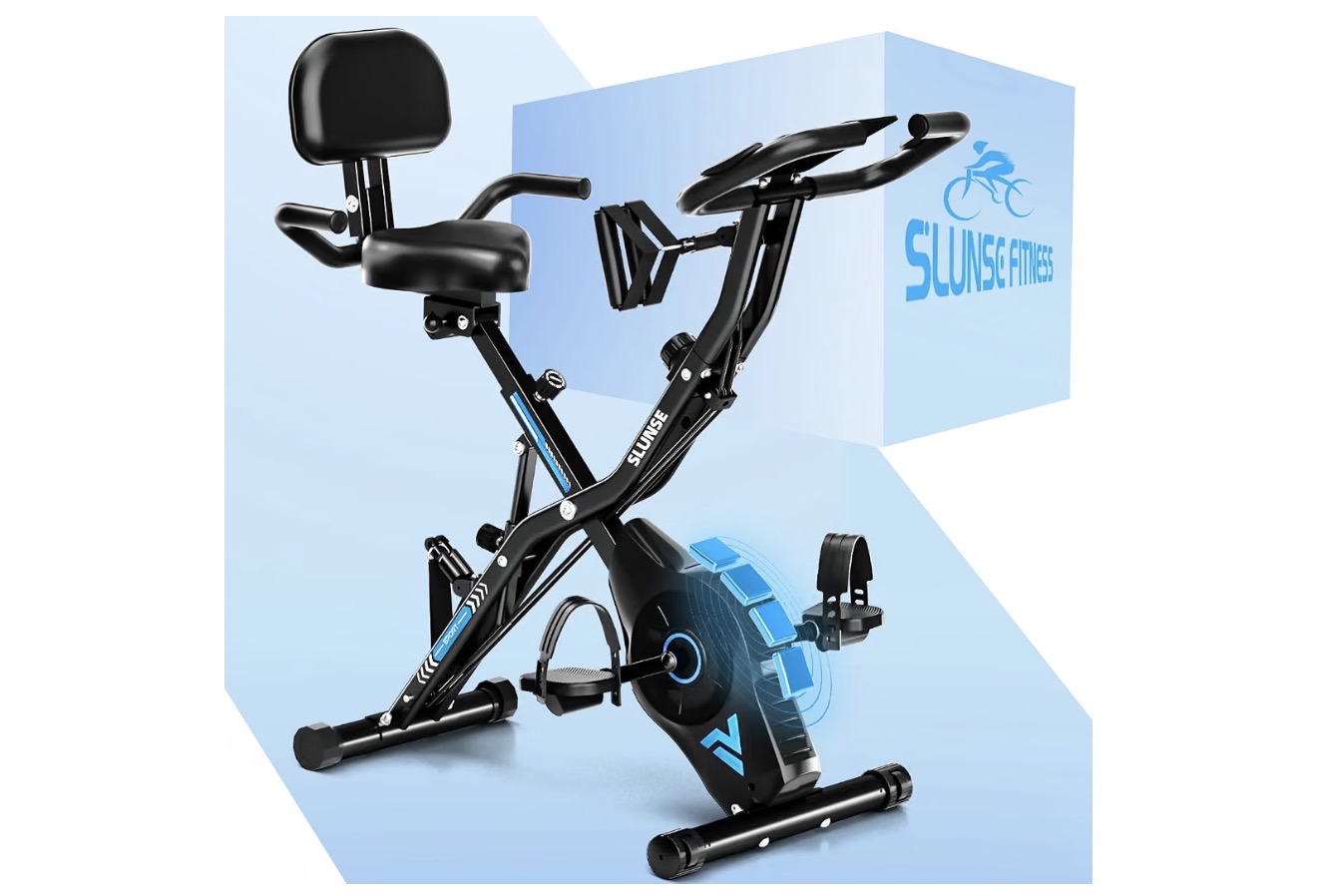
Foldable exercise bike
Folding exercise bikes provide low-impact stationary cycling at home and can be folded for storage. Resistance levels, seating position and load limits depend on the model.
Check price on Amazon
See the current price and availability on Amazon before ordering.
Affiliate link. We may earn a commission at no extra cost to you.
Do both machines count as moderate-intensity aerobic exercise?
Yes, both can provide moderate to vigorous aerobic exercise, helping meet official activity guidelines if used within the recommended heart rate and effort zones.
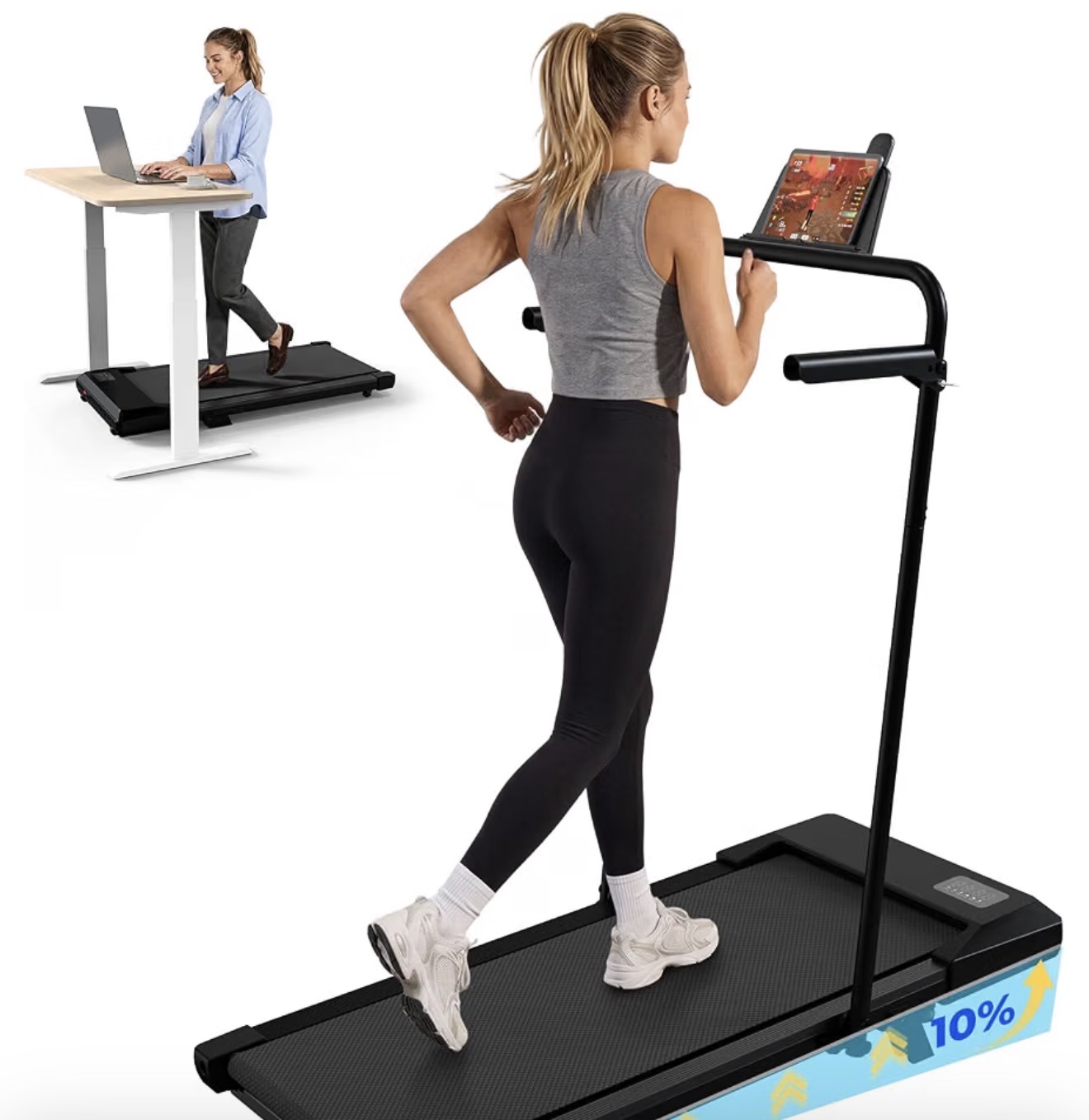
Compact walking pad
Compact walking pads let you walk indoors, often while working at a standing desk. Available speed ranges, noise and weight limits depend on the exact model.
Check price on Amazon
See the current price and availability on Amazon before ordering.
Affiliate link. We may earn a commission at no extra cost to you.
References
Affiliate disclosure: This article may mention products or brands sold by commercial affiliates. We may earn a commission if you purchase using links provided, at no extra cost to you. This does not influence our editorial recommendations.