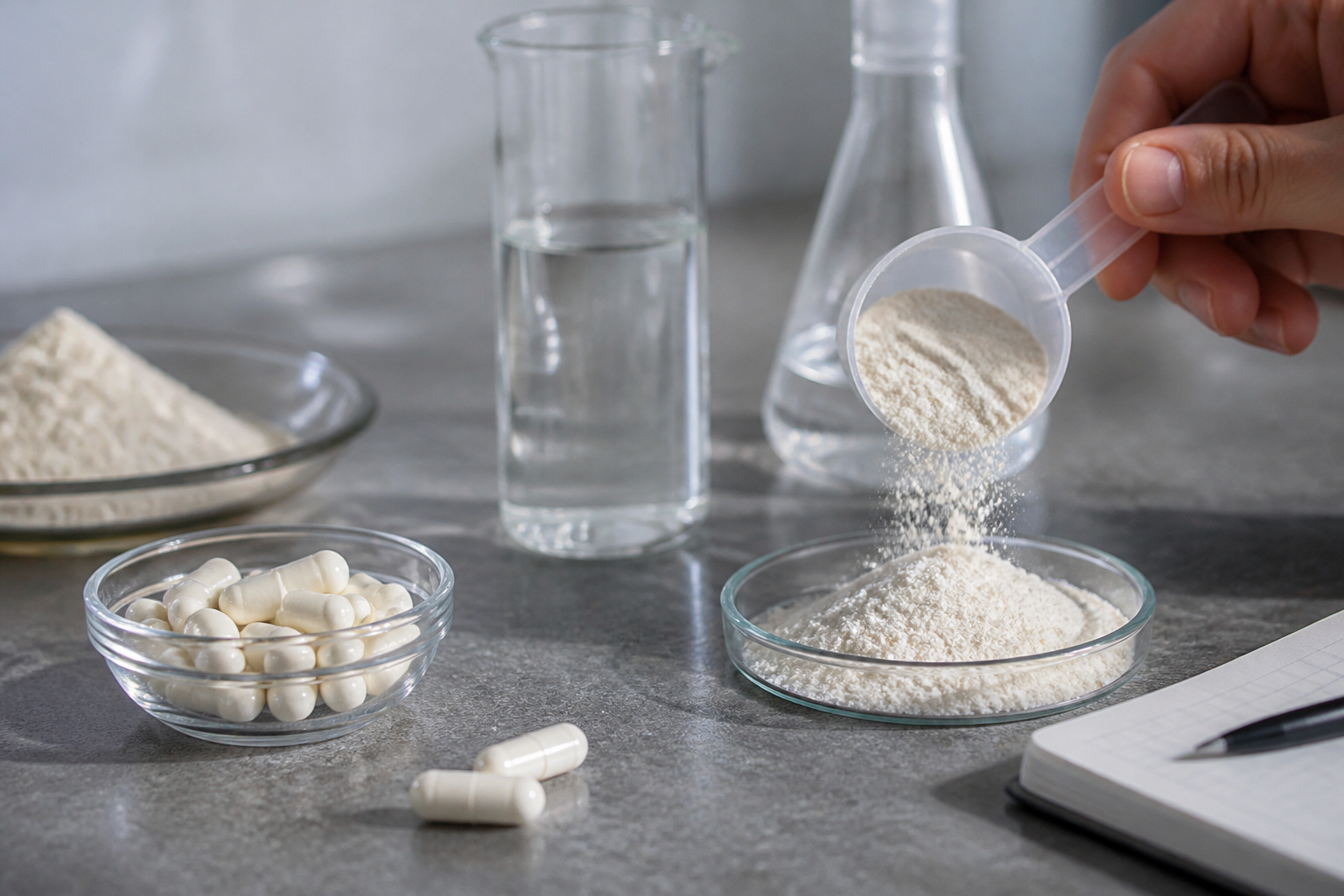
For fitness enthusiasts and athletes exploring muscle and recovery supplements, reading an hmb supplement label guide is essential before purchase and use. HMB (β-hydroxy β-methylbutyrate) has gained interest for its potential to aid muscle growth, reduce exercise-induced muscle damage, and support healthy aging. However, not all HMB products are created equal, and label quality, supporting evidence, and testing certifications should guide any decision.
What Is HMB?
HMB, or β-hydroxy β-methylbutyrate, is a compound produced naturally in the body from the amino acid leucine, found in high-protein foods[^2]. It is commonly sold as a dietary supplement, available to the public in the United States, United Kingdom, and other markets. People interested in muscle health, strength, recovery, and muscle mass preservation during periods of inactivity often turn to HMB supplements.
HMB supplements are available in several forms, with the most common being HMB free acid (HMB-FA) and HMB calcium salt (HMB-Ca). Its popularity in sports, general fitness, and for older adults is mostly due to research suggesting it may reduce muscle breakdown and support better recovery following strenuous training.
What Research Supports HMB Supplementation?
Scientific studies on HMB focus on muscle recovery, muscle damage markers, and muscle adaptations to resistance training. A meta-analysis of randomized controlled trials found that HMB supplementation significantly reduced levels of creatine kinase (CK) and lactate dehydrogenase (LDH)—key indirect markers of muscle damage—after exercise. These effects were most notable in studies running longer than six weeks, suggesting a time-dependent benefit for muscle recovery (Rahimi et al., 2018).
Another systematic review focusing on the HMB free acid form indicated that taking HMB-FA in conjunction with resistance training may reduce muscle damage, enhance immune and hormonal responses to exercise, and promote gains in muscle mass and strength. However, most studies included primarily resistance-trained men, and while the data are promising, further research is needed to clarify the overall role of HMB-FA as an ergogenic aid (Silva et al., 2017).
Meta-analytic evidence specifically in young men shows that HMB leads to small but clear improvements in lower-body and total strength for previously untrained participants, but the effects in resistance-trained individuals are minimal. Broadly, HMB appears to offer small strength gains for beginners and a measurable reduction in muscle damage markers, with less impact on experienced lifters (Rowlands & Thomson, 2009).
Forms of HMB (HMB-FA vs HMB-Ca)
There are two principal forms of HMB available in supplements:
- HMB-FA (Free Acid): This newer form is more rapidly absorbed and may reach peak blood concentrations faster, potentially offering a quicker onset of action. Some research suggests it might be better for acute recovery situations.
- HMB-Ca (Calcium Salt): The original supplement form, HMB-Ca is more widely available and remains stable in both capsule and powder products. Its absorption is slightly slower, but it is the basis for most early research.
Label clarity should indicate which HMB form is present, as dosing equivalency and safety data relate to these specific forms. The research indicates most commercial doses are in the range of about 3 g per day, but always confirm the stated serving size and ingredient details.
How to Read an HMB Supplement Label
Careful label reading is crucial for identifying product quality, safety, and regulatory compliance. In the United States, dietary supplements are regulated as food, not as drugs, and labels should comply with US Food and Drug Administration (FDA) requirements. In the United Kingdom, supplements are classified as foods but have specific label requirements including ingredient listing and claims limitations.
- Ingredient Facts: Ensure “HMB” or “β-hydroxy β-methylbutyrate” is listed, specifying the form (e.g., HMB-FA or HMB-Ca) and the amount per serving, typically in milligrams or grams.
- Serving Size: Check both the serving size and the number of servings per container. Compare these to the dosing used in cited research for context.
- Other Ingredients: Review excipients, fillers, and any added active compounds such as calcium (for HMB-Ca). Some buyers prefer minimal additives.
- Allergen and Safety Warnings: Look for allergen declarations (nuts, dairy, gluten, etc.), age limits, and whether the FDA in the US or FSA in the UK has flagged any concerns.
- Health and Strength Claims: Labels must avoid unsubstantiated or drug-like claims. In both the US and UK, legal regulations restrict claims to those supported by evidence and allow only general structure/function statements (e.g., “supports muscle health”).
For international buyers, remember that a label meeting American regulations is not guaranteed to comply with UK or EU rules, and vice versa.

Testomore
Men’s dietary supplement marketed for testosterone and vitality support; assess the current ingredient label and evidence before buying.
Checked 1 Nov 2026 · price may change; confirm shipping & taxes at the retailer.
Affiliate link. We may earn a commission at no extra cost to you.
Third-Party Testing and Certifications (USP, Informed-Sport, etc.)
Third-party certifications help buyers confirm that what’s on the label matches what’s in the container:
- USP (US Pharmacopeia): Recognised in the US; ensures ingredient purity and accurate labelling, but this mark is uncommon for sports supplements.
- Informed-Sport: Popular with athletes in both the US and UK, Informed-Sport certification ensures products are tested for banned substances and cross-contamination.
- NSF Certified for Sport: Similar to Informed-Sport, common in the US, verifies sports supplements for purity and banned substances.
- Batch Numbers and Dates: High-quality products list batch information and traceability details, which can be checked with the certifying organization.
These marks are voluntary and may not appear on every product, but their presence can be an important part of choosing HMB supplement for athletic or high-stakes sports needs.
Dosing and Safety Considerations
Available research supports daily doses of up to 3 grams of HMB, usually divided throughout the day. Some studies use HMB-FA at similar dosing. There is limited long-term safety data for HMB, but published clinical evidence found no serious adverse effects in healthy adults using standard doses for several weeks. Mild gastrointestinal discomfort has been reported in some cases. Individuals with kidney or liver conditions, pregnant or breastfeeding women, or anyone taking medications should consult a health provider before starting supplementation (NIH ODS Consumer Fact Sheet).
People should not exceed label-recommended doses. Labels that promise “no side effects” or guarantee muscle gain should be treated with skepticism, as individual responses vary and not all populations are studied in depth.
Checklist for Comparing HMB Supplements
- Clearly states the form: HMB-FA or HMB-Ca
- Amount per serving (mg or g) matches research-backed doses
- Full ingredient listing and absence of unwanted fillers
- Legal and safety warnings for your market (US FDA or UK FSA guidelines)
- Only legal, evidence-backed health claims
- Third-party certification (Informed-Sport, NSF, or equivalent)
- Batch or lot traceability with expiry date
- Proper allergen labelling and contact information
This checklist helps ensure purchases of HMB are evidence-based, legal, and as safe as possible for sports, fitness, or healthy aging goals.
FAQs
What is HMB and how is it used in supplements?
HMB (β-hydroxy β-methylbutyrate) is a compound made from the amino acid leucine, offered as a dietary supplement for muscle health, recovery, and strength support. It’s most commonly used by athletes, fitness enthusiasts, and older adults.

African Mango
Nutrina supplement based on African mango (Irvingia gabonensis) seed extract; weight-loss evidence remains limited.
Checked 1 Nov 2026 · price may change; confirm shipping & taxes at the retailer.
Affiliate link. We may earn a commission at no extra cost to you.
What does a high-quality HMB label include?
High-quality HMB supplements provide a clear ingredient list with form and amount, serving size, batch or lot number, safety warnings, third-party certifications, and claims supported by available evidence.
What evidence supports HMB for muscle and recovery?
Research, including meta-analyses, suggests that HMB may reduce exercise-induced muscle damage and aid recovery, especially in training beginners. Effects in experienced athletes appear to be smaller.

Bulk Extreme
Muscle and male-performance supplement; evaluate the complete formulation and claims before use.
Checked 1 Nov 2026 · price may change; confirm shipping & taxes at the retailer.
Affiliate link. We may earn a commission at no extra cost to you.
How do HMB forms and dosing differ?
HMB-FA (free acid) is absorbed faster than HMB-Ca (calcium salt), but both are used in research at similar daily doses (up to about 3g per day). Check your supplement's label for the specific type and dosing instructions.
References
FitnessScopes may receive commissions for purchases made through qualifying affiliate links in this article. This does not impact editorial content or product selection.