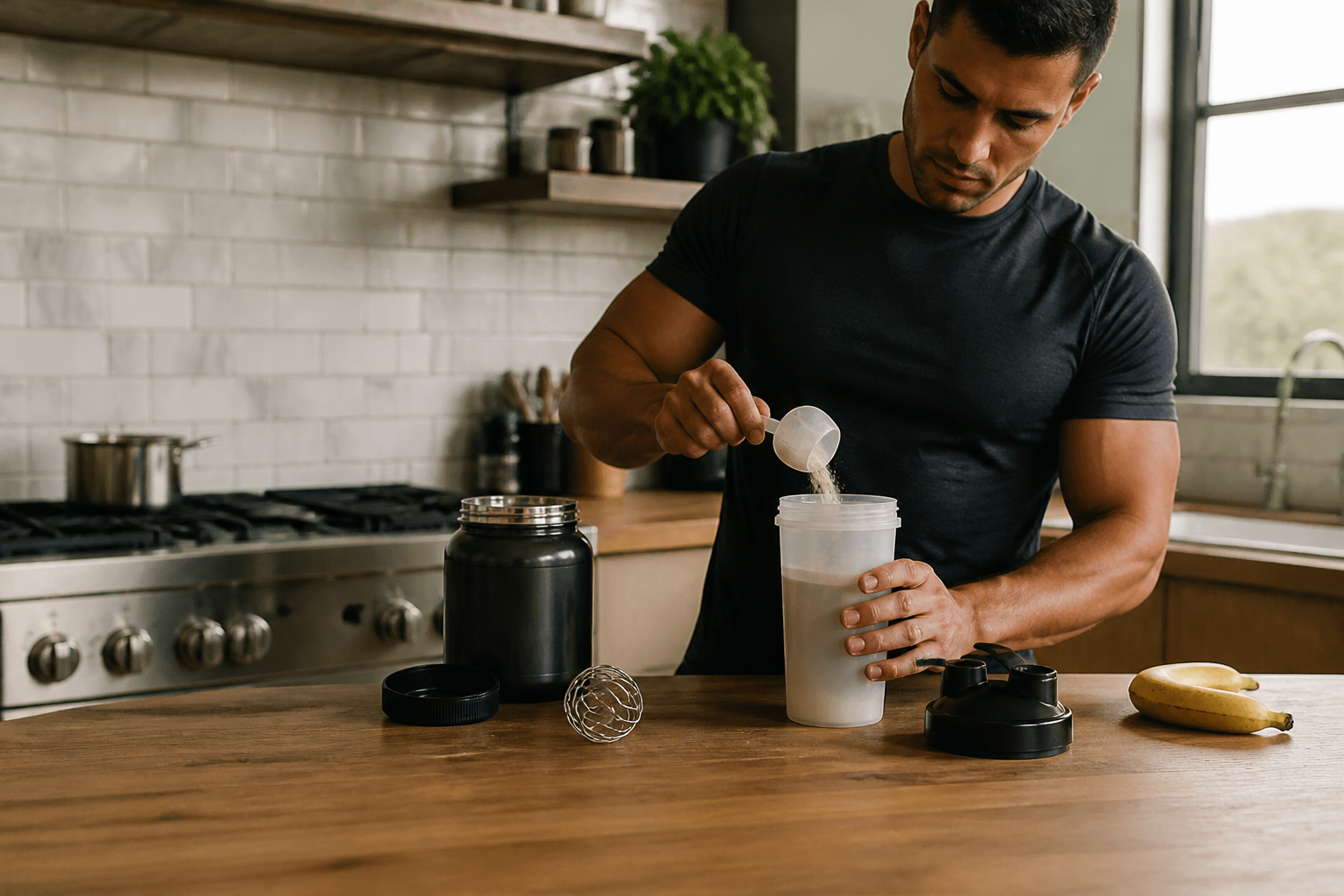
For active adults and gym-goers, creating smooth, convenient protein and recovery drinks is now routine. Yet when you’re choosing a mixing vessel, the blender bottle vs shaker bottle comparison can shape not only mix quality but also cleaning ease and overall user experience. Both options have evolved, offering features that go beyond basic drink preparation and aiming to deliver smoother shakes with less hassle. Understanding their differences helps you pick the best bottle for protein shakes tailored to your lifestyle.
Introduction: Mixing Technology for Protein Drinks
Shaker and blender bottles are designed to efficiently mix protein powders with liquids, combating clumps that can result from simply stirring or shaking in a basic container. Early shaker bottles often had little more than a tight-fitting lid; newer designs, like blender bottles, include mixing aids—most famously, a round or spring-like ball that moves with the motion, breaking up protein powder for a finer texture. The technology used in your bottle can influence not only drink consistency, but also ease of use and upkeep, making it crucial in your protein shake mixing guide.
Blender Bottles: Pros, Cons and Features
Blender bottles generally refer to bottles with integrated mixing systems, most notably a metal or plastic whisk ball. This ball agitates as you shake, creating a mini vortex to dissolve powders quickly and with fewer clumps.
- Mixing Efficiency: The mixing ball dramatically improves blend smoothness, especially for thick or slow-dissolving protein powders, meaning your shakes are more palatable and consistent.
- Leak Resistance: Most models have screw-on lids and snap-shut drinking spouts, reducing the risk of messes in your bag.
- Ease of Cleaning: The mixing ball and bottle itself are usually dishwasher-safe, but some find the ball can collect residue or be misplaced.
- Downsides: More moving parts can mean more to clean or lose, and some users find the ball rattles or is awkward to store when not in use.
For those frequently mixing protein or recovery drinks—at home, the gym, or work—blender bottles offer upgraded performance for little extra effort, though you must clean all parts thoroughly. According to the NHS, inadequate cleaning of bottles can allow bacteria to grow, so it’s important that all pieces are easy to access and wash (NHS Food Safety).
Shaker Bottles: Pros, Cons and Features
Traditional shaker bottles generally have a single large chamber with a secure lid and, at most, a perforated grid or screen insert. Sometimes, they are simple bottles with no internal mixing aid.
- Simplicity: Fewer parts mean easier cleaning, less to lose, and straightforward assembly.
- Durability: With minimal moving pieces, these bottles may last longer—especially if you often transport your shaker in a bag.
- Mixing Limitations: Without a whisk ball or agitator, some powders are hard to dissolve completely, leading to clumps and uneven texture, particularly with denser or stickier mixes.
- Leak Risks: Some models rely solely on friction-fit lids, which may be more susceptible to leaks if not perfectly closed.
For those using simple whey or clear protein drinks, or who want the lowest-maintenance option, traditional shakers still serve the purpose. But their mixing performance is rarely best-in-class.
Evidence on Mixing Consistency/Nutrient Retention

African Mango
Nutrina supplement based on African mango (Irvingia gabonensis) seed extract; weight-loss evidence remains limited.
Checked 1 Nov 2026 · price may change; confirm shipping & taxes at the retailer.
Affiliate link. We may earn a commission at no extra cost to you.
What does independent research say about the effect of mixing process and device type on your actual protein nutrition or shake quality? Studies support that physical mixing can impact the structure and initial digestion kinetics of drinks. For example, research on plant-based shakes found that shakes subjected to more thorough processing (such as high-pressure homogenisation, which goes far beyond manual shaking, but is conceptually similar in aim) resulted in smaller, more evenly distributed particles and much greater protein and lipid digestion during gastric pre-digestion (Guevara-Zambrano et al., 2022). Shakes that were merely mixed by hand formed larger clumps and were digested less efficiently in the stomach, with up to 10 times lower protein digestion after two hours (Digestion kinetics of lipids and proteins in plant-based shakes).
However, the mechanical force in typical blender bottles or shakers is far less than lab homogenisation. While a blender bottle’s mixing ball improves powder dispersion, no research shows a standard shaker or blender bottle dramatically alters the underlying nutrient bioavailability of commercial protein powders in healthy adults. Another clinical trial using milk protein found that, while meal structure affects amino acid absorption, simply doubling the amount or improving blend uniformity does not change fundamental amino acid bioavailability; it is proportional to the protein consumed, not how smoothly it’s mixed (van der Wielen et al., 2020; Blood 15N:13C Enrichment Ratios).
Eron Plus
Two-part men’s supplement system featuring L-arginine, maca, tribulus, ginseng and fenugreek; evidence for performance claims is limited.
View current price at retailer
Prices and availability change — confirm the current price at the retailer.
Affiliate link. We may earn a commission at no extra cost to you.
Practical Considerations for Buyers
Choosing your best bottle for protein shakes depends on more than mixing prowess. Cleaning and hygiene are paramount. According to the NHS, regularly washing all bottle parts and letting them dry completely helps reduce bacterial build-up, especially important because protein residues can spoil quickly (NHS Food Safety). Some bottles are dishwasher-safe, but those with crevices, screens, or balls will need an extra brush or careful inspection.
Member XXL
Men’s wellness capsules with L-arginine, ginseng, fenugreek and botanical extracts; advertised outcomes require independent evidence.
View current price at retailer
Prices and availability change — confirm the current price at the retailer.
Affiliate link. We may earn a commission at no extra cost to you.
Other considerations include leak resistance (especially for taking drinks to the gym), capacity (typical bottles range from 400 ml/14 oz to 800 ml/28 oz), and comfort—larger bottles can be unwieldy, but smaller ones may not hold your preferred serving size. As with water bottles, materials (BPA-free plastic, glass, or stainless steel) and certifications for food safety should be checked (see tips at EatRight: How to Choose a Water Bottle).
Summary Table and Recommendations
| Feature | Blender Bottle | Shaker Bottle |
|---|---|---|
| Mixing consistency | Superior, whisk ball breaks clumps | Less smooth, prone to clumping |
| Ease of cleaning | More parts to clean (ball) | Simpler (fewer parts) |
| Leak resistance | Usually better (screw lid, snap cap) | Varies (snap or pop top) |
| Durability | Slightly more moving parts, more to lose | Fewer parts, robust |
| Nutrient retention | No clinically meaningful difference | No clinically meaningful difference |
| Best for | Thicker shakes, smoothest results | Simplicity, easy cleaning |
Recommendation: If mixing performance and consistency are your chief priorities, especially for dense or plant-based shakes, a blender bottle is generally superior. However, for those prioritising simplicity and quick cleaning, a classic shaker bottle suffices, particularly if you use easily dissolving powders. In both cases, ensure proper cleaning and bottle hygiene to safeguard health.