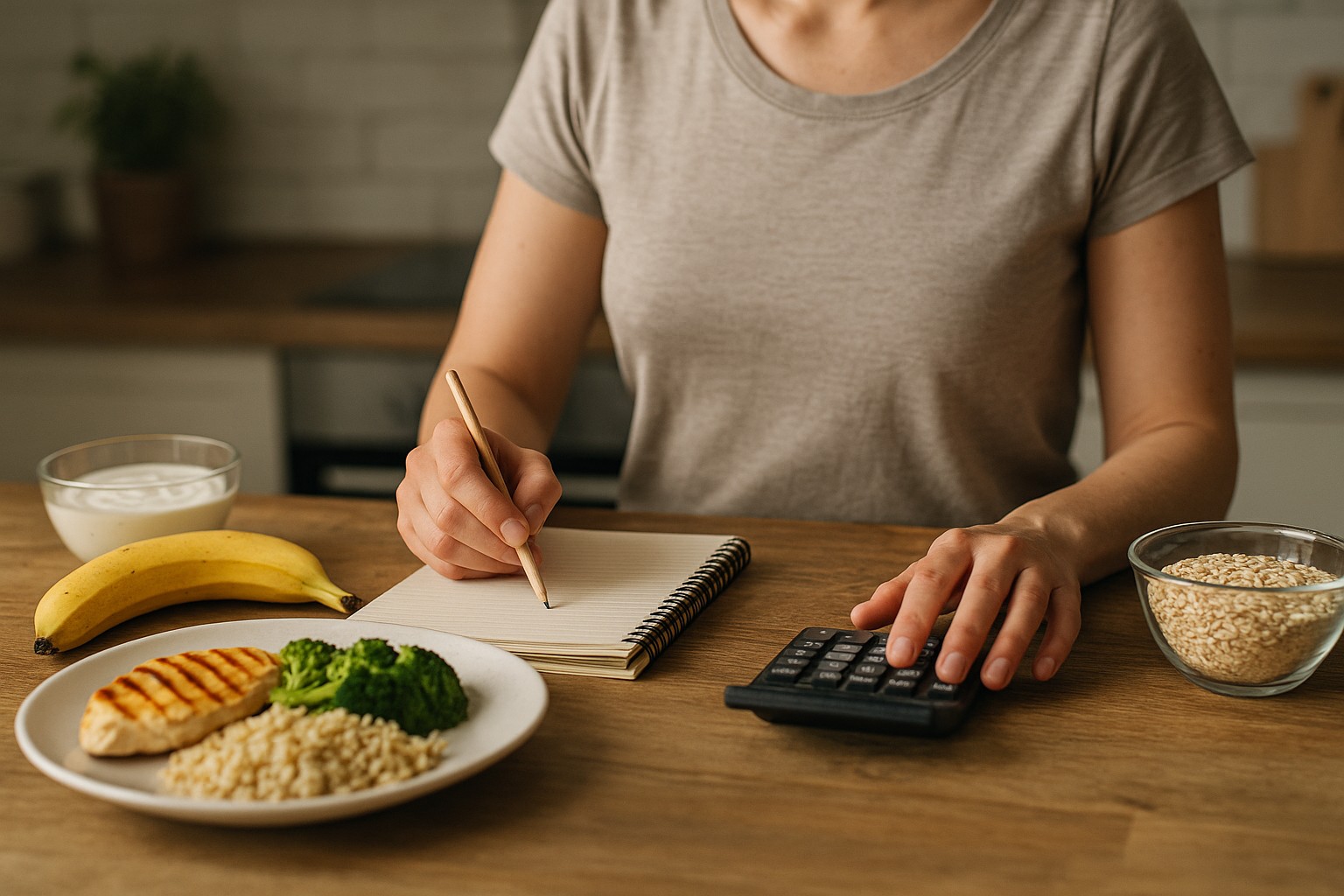
What is a calorie?
A calorie is a unit of energy. Food labels commonly use kilocalories (kcal), although everyday nutrition language usually calls them simply “calories”. Calories do not measure food quality; they describe energy.
Where food calories come from
The main energy-yielding nutrients are carbohydrate, protein and fat. Alcohol also provides energy. Common label calculations use about 4 kcal per gram for carbohydrate, 4 for protein, 9 for fat and 7 for alcohol. Fibre and other components can complicate exact calculations, so label values are estimates rather than laboratory-perfect measurements.
How the body uses energy
Your body uses energy continuously: maintaining organs and tissues, digesting food, moving through daily life and performing planned exercise. Total daily energy expenditure therefore includes more than workouts.
Resting energy expenditure
A large share of daily expenditure supports basic physiological function at rest. Body size and composition are important influences, alongside age, sex and individual variation.
Physical activity
Exercise contributes to expenditure, but so does non-exercise movement such as walking, standing and daily tasks. This can vary substantially between people and between days.
Thermic effect of food
Digesting and processing food also requires energy. The size of this effect differs among macronutrients, but it is only one part of total expenditure.
What are maintenance calories?
“Maintenance calories” is shorthand for an energy intake that, over time, roughly matches expenditure and is associated with relatively stable body weight. It is not a fixed number. Activity, body mass and other factors change, and normal body weight fluctuates because of water, glycogen and digestive contents.
Energy balance and body-weight goals
Over time, sustained energy intake above expenditure tends to support weight gain, while sustained intake below expenditure tends to support weight loss. Real-world changes are dynamic rather than perfectly linear because body mass and expenditure can change during the process.
For a deeper explanation, see Energy Balance when that section is available.
Calories and food quality are different questions
Two foods can provide similar energy while differing substantially in protein, fibre, vitamins, minerals, volume and satiety. Energy intake matters for energy balance, while food quality matters for nutrient adequacy, health and how practical a diet is to sustain. These ideas are complementary rather than competing.
How accurate are calorie labels and trackers?
Nutrition labels and tracking apps are useful estimates, not exact measurements. Portion size, recipe variation, food preparation and database entries introduce uncertainty. Exercise machines and wearables also estimate energy expenditure. Use the data for patterns rather than assuming every number is exact.
Do you need to count calories?
No. Some people find tracking useful for learning portions or managing a specific goal; others prefer consistent meal structures, portion guides or changes in food choices. The useful method is one that provides enough structure without creating unnecessary complexity.
Calories and training
Active people need enough total energy to support training and recovery. Chronically under-fuelling can impair performance and make it difficult to meet nutrient needs. Athletes with demanding schedules may require more deliberate fuelling than people exercising recreationally.
Common misconceptions
- “A calorie is a calorie, so food quality does not matter.” Energy has a consistent physical meaning, but foods differ in nutrients, satiety and health effects.
- “Exercise calories can be measured exactly.” Consumer devices provide estimates.
- “Eating after a certain hour automatically causes fat gain.” Meal timing can affect appetite and performance, but the clock does not override overall energy balance.
- “Very low calories are always faster and better.” More aggressive restriction can increase nutritional and adherence challenges.
Practical approach
Start with the goal. If body weight is stable and performance, health and nutrition are where you want them, there may be no reason to calculate an exact calorie target. If you do track, use several weeks of intake and body-weight trends to interpret the estimate rather than reacting to a single day.
FAQs
Are calories bad?
No. Calories measure energy, which the body requires to function.
Why do calorie needs differ?
Body size, composition, activity, age and other individual factors influence energy expenditure.
Do I need to eat back exercise calories?
Not automatically. Device estimates are imprecise and the answer depends on how your overall intake target was established and on your training demands.
Can calories tell me whether a food is healthy?
No. Calories describe energy; nutrient density, dietary pattern and context answer different questions.