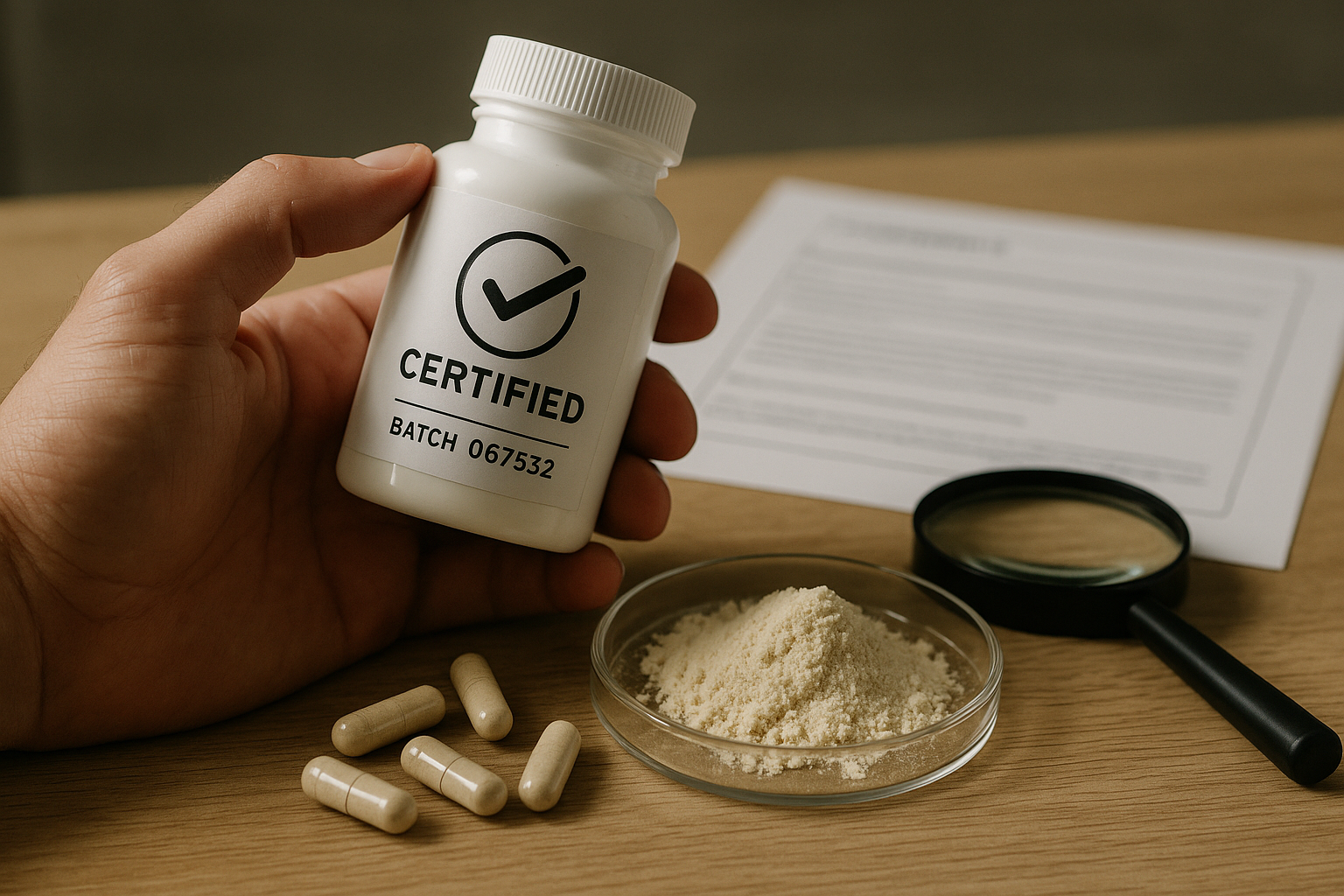
Third-party supplement testing is a crucial concept for athletes and active individuals aiming to manage the risk of contamination or mislabelling in sports nutrition products. While such testing is not a guarantee of safety or effectiveness, it can help reduce – but never completely eliminate – the risk of ingesting prohibited substances or undeclared ingredients. Practically, this means learning to check certifications and batch numbers before using a product, understanding the purpose and limits of independent testing, and recognising athlete responsibilities under strict anti-doping rules.
Quick answer
Third-party supplement testing refers to an independent organisation analysing a supplement to verify that it contains what the label claims and is free of certain contaminants, such as banned substances or dangerous impurities. Relying on third-party tested and batch-certified products can lower – but not remove – the risk of accidental doping or exposure to adulterants. Official agencies (such as UK Anti-Doping and the US Office of Dietary Supplements) emphasise that no product or test process can provide a 100% guarantee of safety, legality or clinical benefit (UKAD) (NIH ODS). Batch numbers must be checked against the testing organisation's published lists before use, ideally right before purchase or consumption.
Why contamination and mislabelling matter
Sports supplements may be contaminated with ingredients not disclosed on the label, or their claimed nutrient amounts may not match actual contents. These issues can occur at multiple points: raw ingredient sourcing, manufacturing, packaging, or even deliberate adulteration for effect. For athletes, this risk is magnified: anti-doping rules apply strict liability, meaning athletes are responsible for any substances found in their body, regardless of intent or cause (UKAD). Even minor contamination from poorly controlled production can result in a positive test, with serious career consequences — such as multi-year bans. For the general public, unlisted pharmaceutical agents or incorrect dosages present broader health risks. Evidence from clinical studies demonstrates how actual vitamin D content can vary widely from label claims, with implications for both safety and efficacy (Vitamin D3 study).
Certification versus efficacy evidence
Third-party certification schemes (such as Informed Sport, NSF Certified for Sport, or others) primarily test for content accuracy and absence of prohibited or harmful substances, not the clinical effectiveness of a supplement. A tested product may be verified as containing the labelled dose of an ingredient and free from major contaminants, but this is not evidence that the ingredient itself will provide the desired training or health benefit in a real-world setting (NIH ODS). For instance, a vitamin D supplement may pass all purity checks, yet still vary in bioavailability or clinical effects based on formulation differences (Vitamin D3 Matrix Study). Certification also does not assess whether the labelled ingredient is appropriate or beneficial for a given purpose or population — such questions require separate scientific and medical guidance.
A step-by-step batch verification checklist
- Assess the need: Confirm with a qualified medical or sports nutrition professional whether a supplement is appropriate for your goals.
- Locate a reputable certification: Identify trusted third-party schemes recognised in your country (such as Informed Sport in the UK and globally, or NSF Certified for Sport in the US). Regulatory agencies and anti-doping bodies typically provide links to recognised lists.
- Check the product’s certification status: Search the online database of the certification programme for the brand, product name and specific batch number. Some schemes require entering the batch/lot number to confirm that the version you are buying has been tested.
- Verify the batch number: Ensure the batch, lot, or serial number on your package matches the tested batch listed on the certifier’s official site. If there is any mismatch, the product is not covered by the published test results and should be avoided if purity is critical.
- Regularly re-check: Repeat this process with every new purchase or before use, as batches change and certification status can be updated or withdrawn.
- Keep records: Document your verification steps and save receipts and screenshots as evidence of due diligence — particularly important for athletes subject to anti-doping rules (UKAD).
For comprehensive label reading, see official guides published by anti-doping and regulatory agencies (NIH ODS).
Limits of testing and athlete responsibility
Third-party supplement testing substantially lowers but does not erase the chance of contamination, mislabelling, or ingredient variation. Testing typically covers only certain prohibited or harmful compounds and only analyses the sampled batch. Cross-contamination, formulation changes or errors may still occur outside the sampled lots. No anti-doping agency or certification body will ever endorse or approve a supplement as absolutely safe for athletes—a claim otherwise signals misleading marketing (UKAD). For athletes under the World Anti-Doping Code, strict liability remains: a positive test, regardless of intent or care taken, remains the athlete’s responsibility. All supplement use, even from certified batches, involves residual risk. Professionals and recreational exercisers alike should balance the potential benefits of supplements against these unavoidable uncertainties, and always prefer food and evidence-based training where possible.
FAQs
What does independent testing check?
Independent (third-party) testing typically examines supplement products for accuracy of label claims and the absence of selected contaminants, including prohibited and harmful substances. It does not test for every possible contaminant or for clinical effectiveness.
How do you verify a product and batch?
Use the official website of the certification scheme (such as Informed Sport or NSF Certified for Sport) to search for your product and enter the batch or lot number. Only buy or use if the number matches a published tested batch, as testing applies to specific lots only.
What can certification not guarantee?
Certification cannot absolutely guarantee safety, legality or athlete eligibility. It does not assess clinical benefit, suitability for your goals, or cover every possible contaminant or formulation change not sampled. Responsibility for supplement use always remains with the athlete or consumer.
References
- Managing Supplement Risks | UK Anti-Doping
- Exercise and Athletic Performance — Office of Dietary Supplements, NIH
- Impact of vitamin D3 dietary supplement matrix on clinical response
This article is for informational purposes only and does not constitute medical or legal advice. FitnessScopes does not receive commissions from supplement brands or certification schemes.