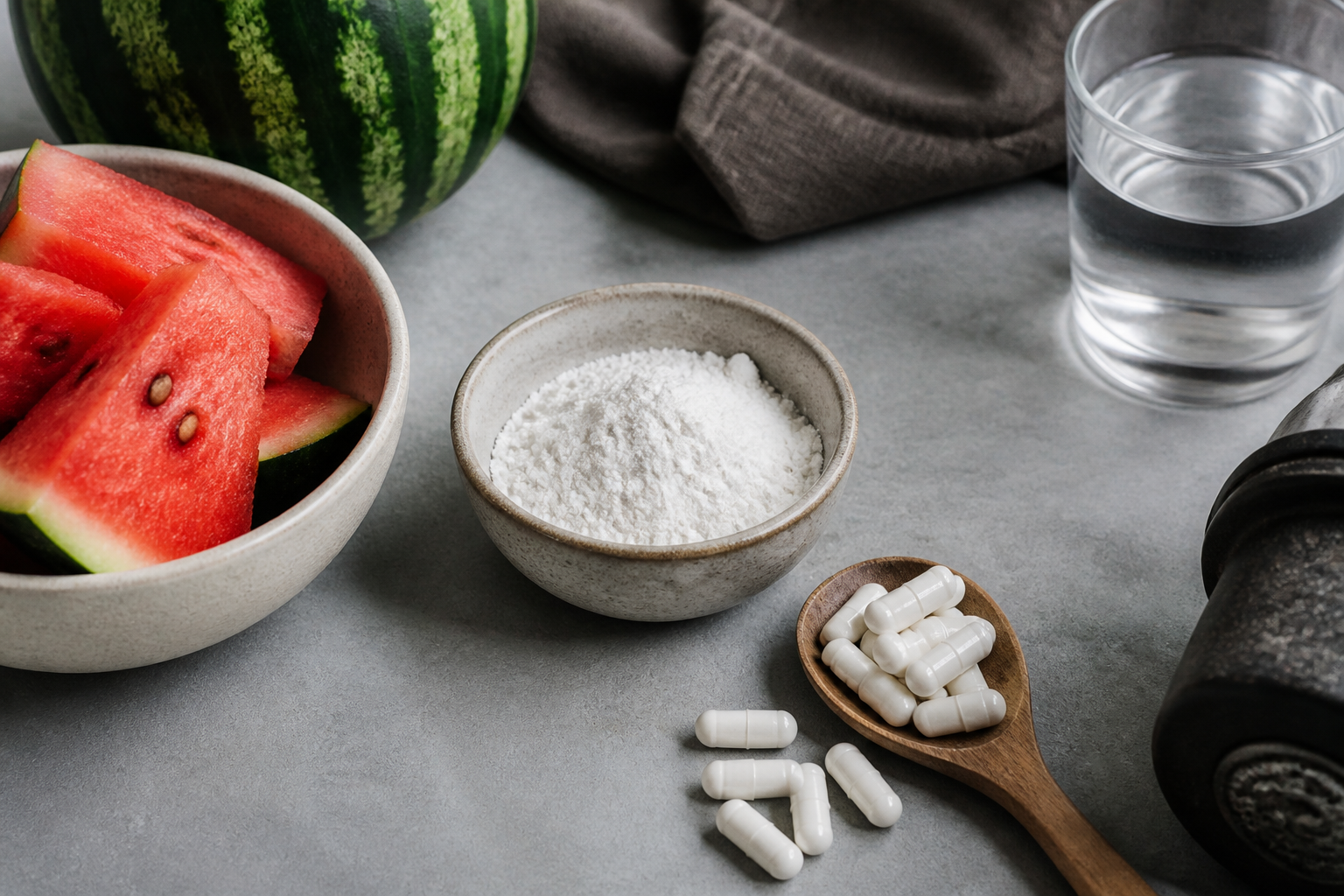
L-citrulline supplement label guide searches are becoming increasingly popular as fitness enthusiasts seek evidence-based ways to support exercise performance and cardiovascular health. However, the international market for L-citrulline is unregulated and diverse, so buyers must focus on label information, third-party certifications, and genuine efficacy data, rather than marketing claims alone.
What is L-citrulline? Uses and supporting evidence
L-citrulline is a non-essential amino acid naturally present in foods like watermelon, and is also produced by the body. Once ingested, it converts into L-arginine, a precursor to nitric oxide—a key mediator of blood flow, vasodilation, and exercise performance benefits. Some athletes and fitness-minded adults use citrulline supplementation aiming to boost sport endurance, reduce fatigue, or support heart health.
Human studies suggest potential benefits for both athletic performance and cardiovascular support. A randomised controlled trial found that seven days of 2.4 g/day L-citrulline improved cycling time trial performance slightly in trained men, reducing time by 1.5% compared with placebo (Oral L-citrulline supplementation). Additionally, a systematic review of 15 randomised trials involving 424 participants reported reductions in both systolic and diastolic blood pressure, especially in those with high baseline values and for durations over six weeks (Effect of L-citrulline supplementation on blood pressure).
Despite these findings, effects in everyday users can vary. Performance gains were modest and mostly evident in trained individuals, while reductions in blood pressure were clearest among pre-hypertensive or hypertensive adults. For healthy, active adults without elevated blood pressure, benefits may be less predictable.
Dosing and side effects: current consensus
Dosing of L-citrulline in studies varies significantly, but typical research doses range from 2 to 6 grams daily, taken over at least several days. Some studies use a split daily dose or a pre-exercise bolus. The performance study referenced above used 2.4 grams for seven days, plus an additional 2.4 grams about one hour before exercise, showing positive results for time trial performance.
Current evidence suggests L-citrulline is well tolerated in healthy adults at these kinds of doses. The US National Institutes of Health notes that no serious adverse effects have been consistently reported at doses up to 15 grams per day for up to eight weeks (NIH ODS Citrulline Fact Sheet). However, high doses may cause mild gastrointestinal symptoms such as discomfort or diarrhoea. Anyone with kidney or liver disease, or those taking medications to lower blood pressure, should consult with their healthcare provider before using L-citrulline, as additive effects could pose risks.
Label checklist: ingredients, purity, batch checks
Given the lack of strict government regulation for dietary supplements in most countries, careful label scrutiny is essential. Here’s what to look for on an L-citrulline supplement label:
- Ingredient transparency: The label should state the exact form (L-citrulline, not citrulline malate unless otherwise desired) and total dose per serving. Look for single-ingredient formulations if purity is your priority.
- Third-party testing: Reputable brands often carry certifications such as NSF Certified for Sport, Informed Sport/Informed Choice, or USP Verified. These marks are important signals of batch-to-batch purity and absence of undeclared substances (which can be crucial for competitive athletes in the US or UK—see NHS sports supplement guidance).
- Absence of proprietary blends: Products listing proprietary blends often obscure the actual citrulline dose, making efficacy and safety uncertain.
- Clear batch or lot numbers: These allow traceability in case of a product recall and reflect manufacturing transparency.
- Country of manufacture and expiry: Some markets require country of origin and shelf-life details to be clearly stated.
Regulatory: key differences (US/UK/EU where available)
L-citrulline supplements are classified as dietary supplements in the United States and as food supplements in the United Kingdom and European Union. There are notable differences in oversight:
- United States: Under the Dietary Supplement Health and Education Act (DSHEA), products do not require pre-market approval. Manufacturers are responsible for ensuring safety and proper labeling, but the FDA acts mainly in a post-market enforcement role. Health claims must not imply disease cure or prevention unless specifically authorised.
- United Kingdom & EU: The Food Standards Agency (FSA) and European Food Safety Authority (EFSA) oversee supplement safety, with particular scrutiny on claims made. Any product making health claims must use language approved by EFSA. As of 2024, there is no authorised health claim for L-citrulline related to performance or cardiovascular health on the EU register. Import/export rules may apply post-Brexit, affecting availability.
In both regions, lack of quality testing is a concern. Regulatory authorities recommend choosing only products from reputable brands that use laboratory verification and avoid unsubstantiated claims. Some countries also require advisory statements on sports supplements, especially regarding potential for contamination with banned substances (NHS sports supplement guidance).
How to compare product quality
Quality varies significantly between brands and batches. To select a reliable product, international consumers should consider:
- Dose accuracy: Choose products with clearly stated, research-aligned doses per serving (typically 2-6 grams for L-citrulline, not including added malate).
- Quality certifications: Seek out third-party certifications (NSF Certified for Sport, Informed Sport/Choice, USP Verified). These are crucial for athletes and add confidence for all consumers concerned about purity.
- Label clarity: Full disclosure of ingredients, absence of proprietary blends, and transparent batch or lot coding mark higher quality.
- Reputable manufacturer: Established brands with a clear company history, manufacturing transparency, and accessible support are preferable to untraceable importers or generic online sellers.
- Customer service and recall handling: Brands that display clear recall/returns policies and provide contact details offer more consumer protection internationally.
Remember: low price does not guarantee value if a supplement is underdosed, adulterated, or contaminated. The risk is potentially increased when buying from non-specialist online platforms serving multiple international markets.
FAQs
Can L-citrulline help with workout performance?
Modest improvements in endurance-type exercise have been seen in healthy, trained men in controlled trials, but effects for casual or recreational athletes may be less consistent. Most reliable studies use at least 7 days supplementation and doses around 2-6 grams per day.
Is L-citrulline safe to take daily?
Current research indicates that daily L-citrulline doses up to about 6 grams are generally safe for healthy adults, but very high doses may cause mild gastrointestinal symptoms. Those with high blood pressure already being treated should consult a doctor before starting.
What should I prioritise when reading an L-citrulline supplement label?
Look for clear dosing, independent third-party certification (such as Informed Sport or NSF Certified for Sport), batch numbers, and absence of proprietary blends. This ensures both purity and a known quantity of the active ingredient per serving.
References
- Oral L-citrulline supplementation enhances cycling time trial performance in healthy trained men: Double-blind randomized placebo-controlled 2-way crossover study
- Effect of L-citrulline supplementation on blood pressure: a systematic review and meta-analysis of randomized controlled trials
- NIH ODS Citrulline Fact Sheet
- NHS - Are sports supplements worth it?
Affiliate disclosure: If you purchase through links on this site, we may earn a commission, which helps support our evidence-based work.
Explore more Supplement Guides