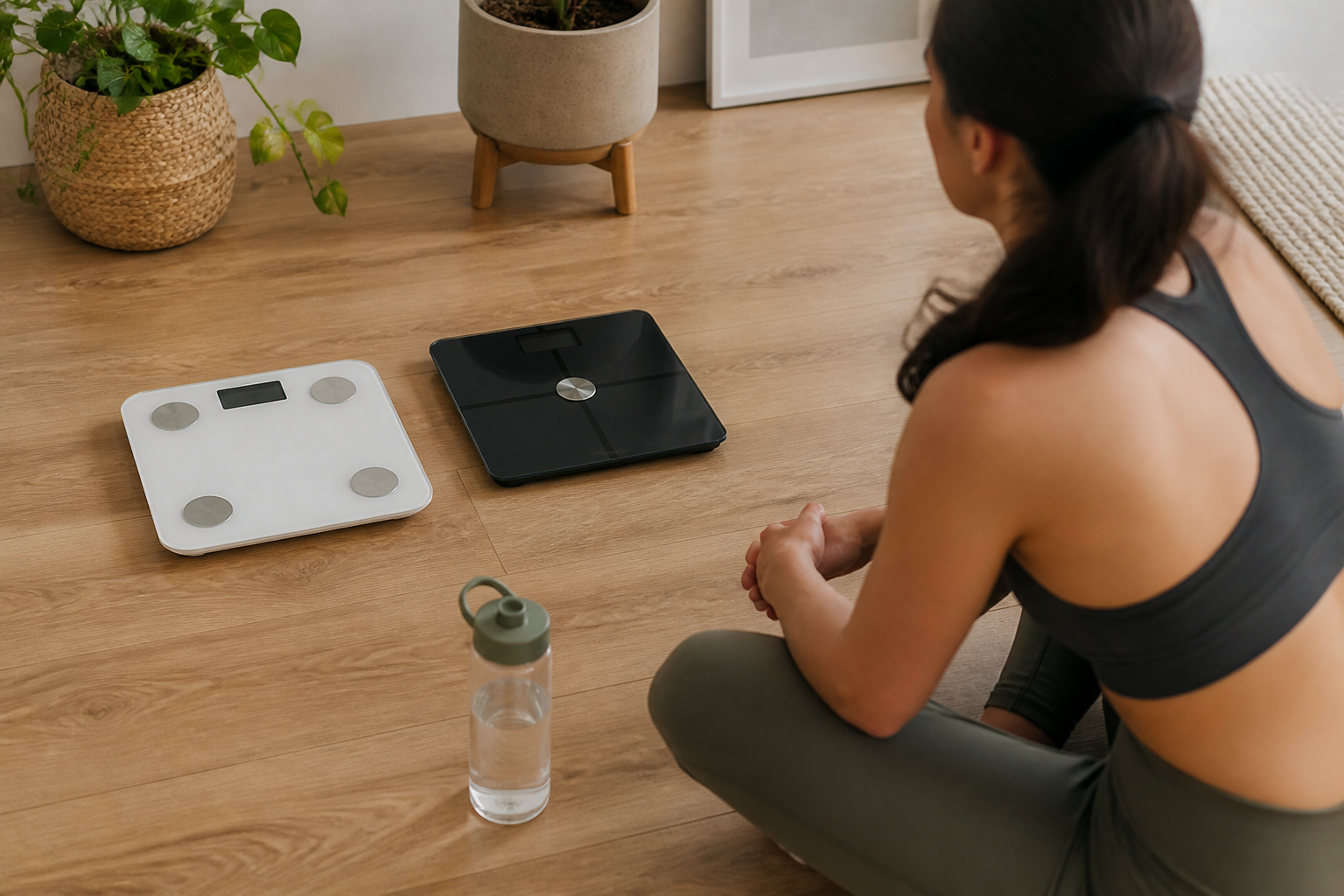
Bioelectrical impedance vs smart scale: When choosing a device for in-home body composition measurement, active adults and those managing weight are often faced with a barrage of choices—from basic bioelectrical impedance (BIA) devices to sophisticated smart bathroom scales that promise instant body fat, muscle, and hydration results synced directly to your phone. But how do these methods work, what do independent studies say about their accuracy, and what features or privacy considerations truly set them apart? This evidence-based comparison draws from neutral, peer-reviewed sources and official guidance for readers in the US, UK, and internationally.
How Body Composition Scales Work (BIA and Smart Features)
BIA technology is the scientific foundation behind most modern body composition scales, including many labelled as "smart." BIA works by sending a safe, low-strength electrical current through the body; it measures resistance (impedance) as the current travels through tissues, estimating body water, lean mass, and fat mass based on established physiological equations. Muscle, holding more water, conducts electricity better than fat, which resists the flow, allowing the device to infer your body composition.
Smart scales generally combine BIA hardware with added features like Bluetooth/Wi-Fi syncing, user recognition, smartphone app integration (tracking trends, setting weight or fat loss goals), and often additional sensors such as heart rate or even pulse wave velocity. Some also employ proprietary algorithms to provide metrics such as visceral fat or metabolic age, calculated using a mix of electrical impedance data, user-entered age, sex, height, and weight.
It’s important to note that BIA-based methods in consumer scales generally use foot-to-foot measurement, passing the signal up one leg and down the other, focusing analysis on the lower body rather than a whole-body reading typical of clinical BIA or gold-standard DEXA (dual-energy X-ray absorptiometry) scans. Some advanced home devices attempt to measure hand-to-foot or multi-frequency readings for greater accuracy, although such features are not universal in all smart scales.
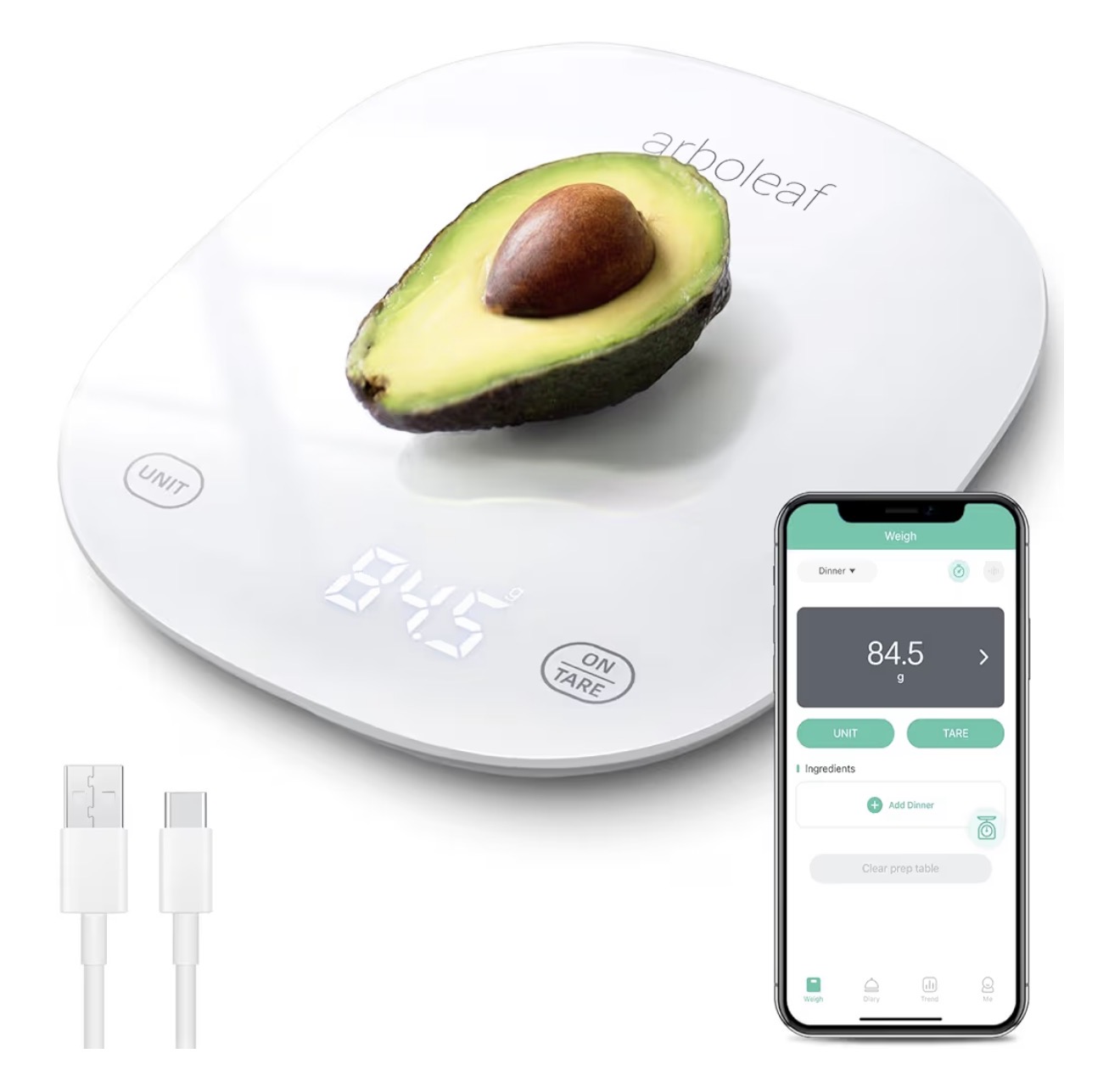
Digital nutrition kitchen scale
Digital kitchen scales measure food portions by weight, which helps make recipes and nutrition logs more consistent. Units and capacity vary between models.
Check price on Amazon
See the current price and availability on Amazon before ordering.
Affiliate link. We may earn a commission at no extra cost to you.
Comparison of Methods: BIA, Smart Scale Algorithms, Multi-Frequency Devices
Not all BIA-based devices are created equal, and the integration of smart features can further complicate measurement results. Basic BIA and multi-frequency devices differ primarily in the technology’s approach to water compartmentalization: single-frequency BIA mainly estimates total body water, while multi-frequency BIA aims to distinguish between intracellular and extracellular fluid, purportedly improving accuracy—especially for athletic or elderly users whose hydration levels can fluctuate (Baloda et al., 2026).
Smart scales layer software algorithms over BIA readings. These algorithms are often trained using statistical models built from reference populations who have undergone DEXA scanning. However, the proprietary nature of most commercial algorithms means the exact method isn’t transparent and can lead to a mismatch between your own results and clinical gold standards. As shown in a 2021 observational study comparing three commercial smart scales against DEXA, while weight readings were highly accurate (differences typically less than 1 kg or ~2 lbs), the median error in body fat mass estimates ranged from about –2.2 to –4.4 kg (roughly –5 to –10 lbs), suggesting a tendency to underestimate body fat. Muscular mass errors ranged similarly. These results also demonstrated that measurement errors were influenced by a person’s individual characteristics, such as their weight, BMI, and fat mass (Frija-Masson et al., 2021).
More sophisticated scales may estimate additional parameters like bone mass, basal metabolic rate, or even attempt segmental analysis (arms, legs, trunk) using more sensors. However, all still rely on mathematical models with built-in assumptions and population averages, meaning individual readings can diverge significantly from clinical reality, especially outside of the demographic profile used in algorithm training.
Accuracy and Evidence Limitations (with Reference Ranges)
The accepted gold standard for body composition assessment is DEXA, which physically images tissue compartments; clinical BIA protocols (often hand-to-foot, multiple frequency) can achieve comparably reliable results under controlled conditions. In contrast, home BIA smart scales should be interpreted as providing trend data rather than precise readings. As demonstrated in peer-reviewed research, while commercial smart scales are generally quite accurate for body weight, their estimates of body fat and muscle mass have much greater margins for error. Observed absolute errors in fat mass ranged between roughly –2.2 kg to –4.4 kg compared to DEXA, with a tendency to underestimate body fat and a similar range of error in muscle mass estimation. That’s a 5–10 lbs margin of error—which can be significant for individuals closely monitoring fitness or weight loss progress (Frija-Masson et al., 2021).
Reference ranges for healthy body fat are not scale-specific but drawn from population studies—e.g., typical healthy adult ranges are approximately 14–31% for women and 6–24% for men. Official guidance, such as that from the US National Institute of Diabetes and Digestive and Kidney Diseases (NIDDK), underscores the limitations of such consumer devices, emphasizing that home BIA and smart scales cannot match the consistency or validity of clinical methods in producing absolute body composition values (NIDDK).
Hydration, meal timing, skin temperature, age, and menstrual cycle phase can all skew results, as each impacts the body’s resistance properties. Trends over time—especially when measurements are taken under consistent conditions (same time of day, before eating/drinking, after bathroom use)—are more meaningful than any single reading for health or athletic applications.
Features to Consider: App Integration, Multi-User Profiles, Data Access
Beyond core measurement principles, practical features often make or break your long-term satisfaction with a body composition scale:
- App Connectivity: Many smart bathroom scales can sync all metrics wirelessly to an iOS or Android app. Check for compatibility with your devices and preferred fitness platforms (Apple Health, Google Fit, Fitbit, etc.).
- Multi-User Support: Some scales can recognise and store data for several users (common is 8–16 profiles)—helpful for households or fitness groups. User switching reliability varies by model; manual selection reduces misattribution.
- Guest and Athlete Modes: "Athlete mode" adjusts calculation assumptions for highly active users; guest access allows one-off measurement sharing without saving data to a permanent profile.
- Display and Data Export: Look for clear on-device screens and the option to export raw data (CSV, PDF) for further tracking or sharing with health professionals.
- Battery and Surface Design: Rechargeable units offer convenience, while a larger platform with stable feet improves measurement repeatability.
For those tracking body composition as part of a medical condition or muscle health concern (e.g., sarcopenia), further clinical-grade validation may be required before relying on trends alone (Kim et al., 2026), and such cases should defer to professional assessment.
Data Privacy and Regional Regulatory Aspects
Privacy and regulatory oversight of smart scale data differ between markets. In the US, consumer health devices must adhere to Federal Trade Commission (FTC) and sometimes Health Insurance Portability and Accountability Act (HIPAA) guidelines, though not all scale data qualifies as protected health information. In the UK and EU, the General Data Protection Regulation (GDPR) offers stronger protections, requiring manufacturers to be transparent about data handling and processing, and gives users control over personal data access and erasure.
Many smart scales transmit data via third-party servers—sometimes outside your country. Always check the manufacturer's privacy policy for specifics on data control, third-party access, and account deletion processes. Device approval and marketing standards (including required medical certifications) also differ: in the US, only some models are FDA-registered if used for medical purposes; in the UK, CE or UKCA marks indicate conformity with health, safety, and environmental protection standards, though these are not equivalent to medical device approval. Buyers should therefore consider what data is collected, how it’s stored, and which jurisdiction applies, especially if integrating wearable, app-based, or cloud-based features.
Evaluation Checklist for Buyers
- Identify Your Goals: Are you most concerned with consistent trends, occasional self-checks, or medically precise values?
- Review Device Technology: Does the scale use basic, single-frequency BIA, or does it offer multi-frequency, hand-to-foot, or segmental analysis?
- Understand the Limitations: Expect accurate weight tracking but interpret body fat/muscle numbers as trend data. Factor in product reviews with evidence-based performance validation where available.
- Consider App Ecosystem: Confirm that your smartphone/platform is supported. If multi-user, check if users are automatically differentiated or must be manually selected.
- Privacy Oversight: Read and compare privacy policies, focusing on where, how, and by whom your data is stored and processed. Check for device manufacturer compliance with local law (e.g., GDPR, HIPAA, CE/UKCA or FDA listing if relevant).
- Maintenance and Durability: Prioritise reputable manufacturers and models using quality sensors and robust construction.
- Medical Conditions: If you have a pacemaker, implanted electronic device, or are pregnant, consult your healthcare provider before using any BIA device.
Ultimately, for home users, the best body composition scale is one that provides consistent readings for your purposes, respects your privacy, and is used as part of a broader approach to health, rather than a diagnostic tool in isolation.
FAQs
How do bioelectrical impedance (BIA) and various smart scales actually work?
Both BIA and smart scales measure the body's resistance to a small electrical current. Smart scales add electronic connectivity and algorithms to estimate body composition and sync data to your devices. Accuracy depends on the technology and algorithms used, as well as the user’s characteristics and measurement conditions.
What are the evidence-based limits of in-home body fat and muscle measurement?
Home BIA and smart scales provide trends but can deviate by several kilograms (5–10 lbs) from gold-standard DEXA readings, especially for fat and muscle mass. Multiple factors like hydration, body shape, and algorithms cause these possible inaccuracies.

African Mango
Nutrina supplement based on African mango (Irvingia gabonensis) seed extract; weight-loss evidence remains limited.
Checked 1 Nov 2026 · price may change; confirm shipping & taxes at the retailer.
Affiliate link. We may earn a commission at no extra cost to you.
Are there major differences in features, connectivity or data privacy between regions?
Yes. Privacy and data handling in the US are governed by differing standards (FTC, HIPAA), while the UK/EU have stricter GDPR rules. Device approval or marketing can also vary by country (e.g., CE/UKCA in UK/EU, FDA in US), affecting which products are available and how data is safeguarded.

Moringa Actives
Moringa-leaf-based weight-management supplement in a 60-capsule pack; marketed claims need evidence review.
Checked 1 Nov 2026 · price may change; confirm shipping & taxes at the retailer.
Affiliate link. We may earn a commission at no extra cost to you.
What features and validation steps matter most for accuracy?
Look for multi-frequency BIA, clinical validation studies, and clear instructions on measurement conditions. Consistent use (time of day, hydration) improves tracking. For data security, check for robust privacy policies and compliance with local data protection regulations.
References
FitnessScopes is reader supported. If you buy through links on this page, we may earn an affiliate commission at no extra cost to you.
Explore more Weight Management GuidesRelated FitnessScopes guides
- building sustainable activity habits without extreme workout plans
- cardio and energy expenditure
- exercise and weight management
- satiety signals: how the body regulates hunger and fullness
- sleep and weight management
- tracking body-weight trends: a consistent weigh-in routine