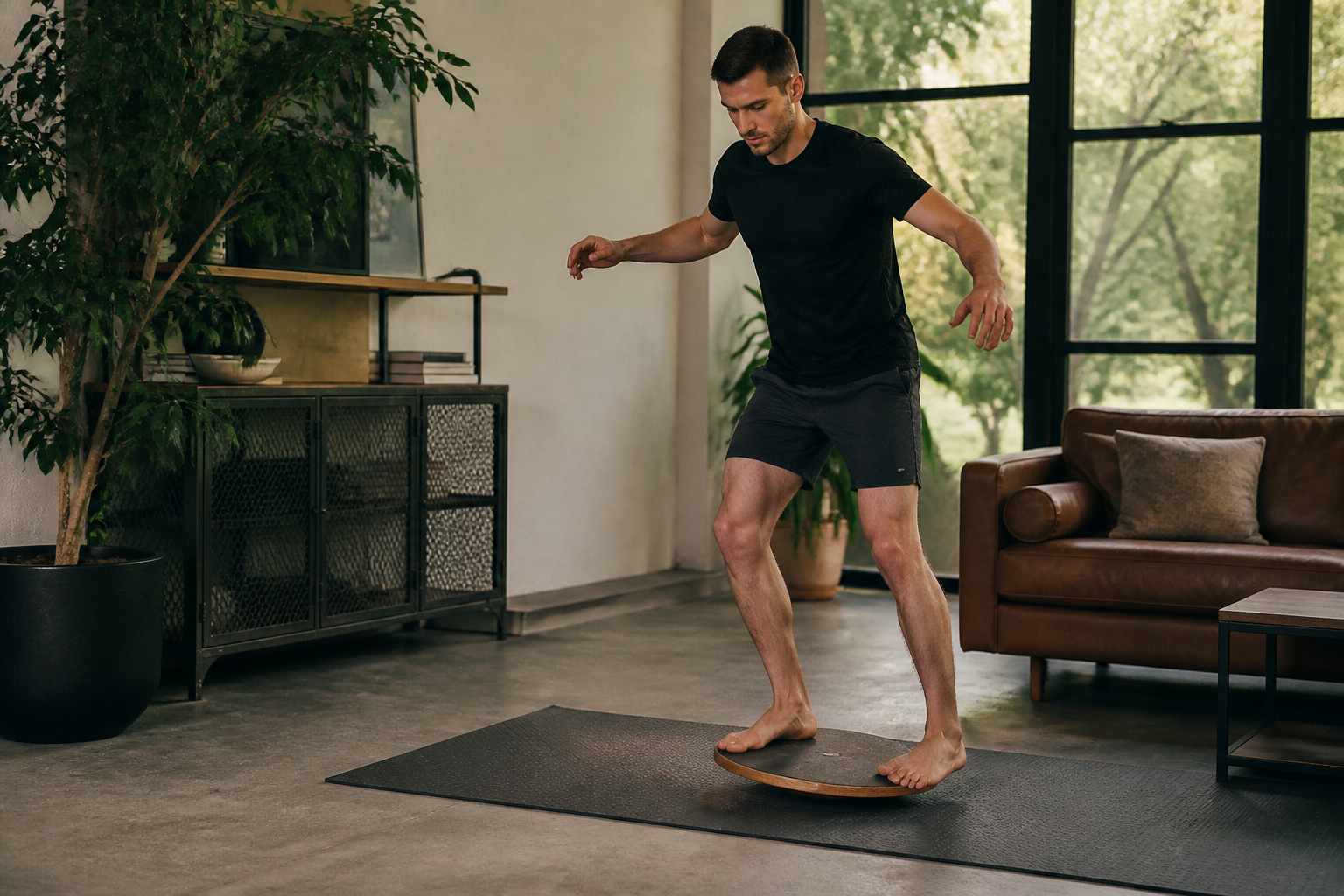
Balance trainers are increasingly popular tools in home fitness settings for improving strength, mobility, and performing rehabilitation exercises. Performing a robust balance trainer comparison requires understanding the variety of available equipment, how they work, and what scientific evidence supports their use. For readers in both the US and UK, choosing safe, effective, and regulated options also matters. This article explores current evidence, practical considerations, and regulatory context for those considering balance trainers as part of their home exercise regimen.
Introduction: Role of Balance Trainers in Home Fitness
Balance training has broad applications in home fitness, from fall prevention in older adults to enhancing athletic performance and supporting rehabilitation from injury. Balance trainers—such as boards, cushions, and platforms—are designed to create instability, forcing users to engage stabilising muscles and improve proprioception. Official bodies like the NHS in the UK recommend balance exercises at home, often with minimal equipment, to enhance mobility and reduce fall risk (NHS). For adults of all ages and abilities, balance work is now seen as a central pillar of functional fitness alongside strength and flexibility routines. The appeal of home balance equipment stems from its simplicity and adaptability, making it suitable for a wide range of users aiming to build strength, stability, and confidence in movement.
Comparison Table: Types and Features
| Equipment Type | Typical Features | Common Uses | Difficulty Level |
|---|---|---|---|
| Balance Board | Rigid surface on rounded or roller base; wood/plastic | General balance training, ankle rehab, core work | Moderate–High (customisable) |
| Wobble Cushion | Inflatable, soft, unstable cushion (disc); variable firmness | Beginner balance, seated core activation, rehabilitation | Low–Moderate, adjustable inflation |
| BOSU-type Trainer | Half-sphere dome; flat platform base | Dynamic training, step-ups, plyometrics, rehab | Moderate–High |
| Balance Pad | Soft foam pad; non-slip; rectangular/square | Ankle/proprioception drills, physical therapy, standing work | Low–Moderate |
| Rocking Platform | Curved base, side-to-side rocking | Controlled directional balance, lower limb rehab | Low–Moderate |
This comparison highlights key differences between major types of home balance equipment. For instance, a balance board vs wobble cushion: the former usually offers greater challenge and engagement for experienced users, while the latter may be safer for beginners or those in rehab. Equipment choice should match the user’s ability, goals, and desired progression.
Evidence for Training and Rehab
Multiple systematic reviews support the role of dedicated balance training in improving physical function, especially in older adults and athletes. Lesinski et al. (2015) found that structured balance training significantly improves static and dynamic stability, as well as proactive and reactive balance, particularly with regular (three times per week) programs of around 11–12 weeks in duration (Effects of Balance Training on Balance Performance in Healthy Older Adults). The evidence confirmed moderate to large improvements in balance performance measures, relevant for fall prevention, daily activities, and mobility in healthy adults. However, the review also noted considerable variability in study designs and a need for more precise dosing guidance, especially regarding repetitions and intensity.
In athletic settings, Zech et al. (2010) reported that balance training reliably enhances postural sway control and overall functional balance, though results for specific athletic skills (e.g., jumping or sprinting) were less consistent (Balance training for neuromuscular control and performance enhancement). Practically, this means that most individuals will benefit from added balance work—even if optimal equipment or protocols remain debated. Crucially, these systematic reviews do not distinguish between different brands of trainers, but rather highlight the broader benefit of regularly challenging postural stability, whether through balance boards, wobble cushions, or related apparatus.
The NHS provides detailed guidance for home-based balance exercises, emphasising progression, safety, and frequency. Their recommendations—such as one-leg stands or heel-to-toe walking—can be enhanced with home balance equipment but do not require any commercial device to be effective (NHS). This underlines that the primary benefit arises from consistent practice and appropriate challenge, not from any specific product alone.
Buying Guide: Safety and Durability
When selecting home balance equipment, buyers should prioritise the following factors for safety and usability:
- Non-slip Surface: Essential for any balance trainer to reduce risk of falls or slips.
- Durable Materials: Prefer high-density foam, reinforced plastics, or solid wood for longevity.
- Load Capacity: Check maximum weight limits; most home trainers suit adults up to 250–300 lb (113–136 kg).
- Adjustability: Inflatable products (like wobble cushions) should allow users to customise firmness or instability as skills progress.
- Edge Stability: Especially for rounded boards and rocking trainers, wide edges and stable bases reduce risk to beginners.
- Ease of Cleaning: Washable or wipe-clean surfaces support hygienic home use, ideal for shared households.
Follow manufacturer instructions and, especially for new users or those with limited mobility, set up near a wall or sturdy chair as recommended by the NHS (NHS). For those in rehabilitation, assessment by a physiotherapist or healthcare professional may help match specific trainer features to personal needs and safety requirements.
Product Certification and Regulation in the US and UK
Most balance trainers sold commercially in the US and UK fall under the category of fitness equipment rather than medical devices. As such, they are generally regulated for consumer safety (e.g., material safety, weight capacity, non-slip standards) but do not require evidence of efficacy unless marketed as medical or therapeutic devices. In the UK, the relevant safety standards are governed by BSI and general consumer goods requirements. In the US, Consumer Product Safety Commission (CPSC) guidelines cover home exercise equipment.
If balance trainers are advertised for therapeutic use (for example, in physiotherapy clinics or for post-injury rehabilitation), additional regulation may apply, such as compliance with the Medical Devices Directive (UK/EU) or FDA (US)—though this typically applies to devices making explicit health or therapeutic claims. For ordinary home balance boards or wobble cushions, voluntary standards—such as ASTM F1749 (for fitness equipment general safety in the US)—may be met for consumer confidence but are not mandatory. Always check product documentation for clear manufacturer claims and certifications, and consult with a professional if using for medical reasons.
Summary: Matching Equipment To Goals
No single product will be optimal for every user or goal. The main takeaways from current evidence and safety context are:
- Balance boards challenge coordination and core strength, best suited to experienced exercisers and those aiming for advanced training.
- Wobble cushions and foam pads are ideal for beginners, fall prevention, and rehabilitation, offering adjustable difficulty and safer progressions.
- Consistency in practice—at least twice per week for several weeks—is more important than the choice of device itself for improving balance (Lesinski et al., 2015).
- Product selection should focus on non-slip materials, appropriate weight limits, and adjustability.
- Home users in both the US and UK should ensure products meet basic consumer safety standards relevant to their country, by checking documentation when purchasing.
Ultimately, evidence suggests most adults—including older individuals and athletes—can improve balance and stability using home equipment if their chosen tool matches their ability level and intended outcome. Structured, progressive routines are key to seeing benefits, regardless of product brand.