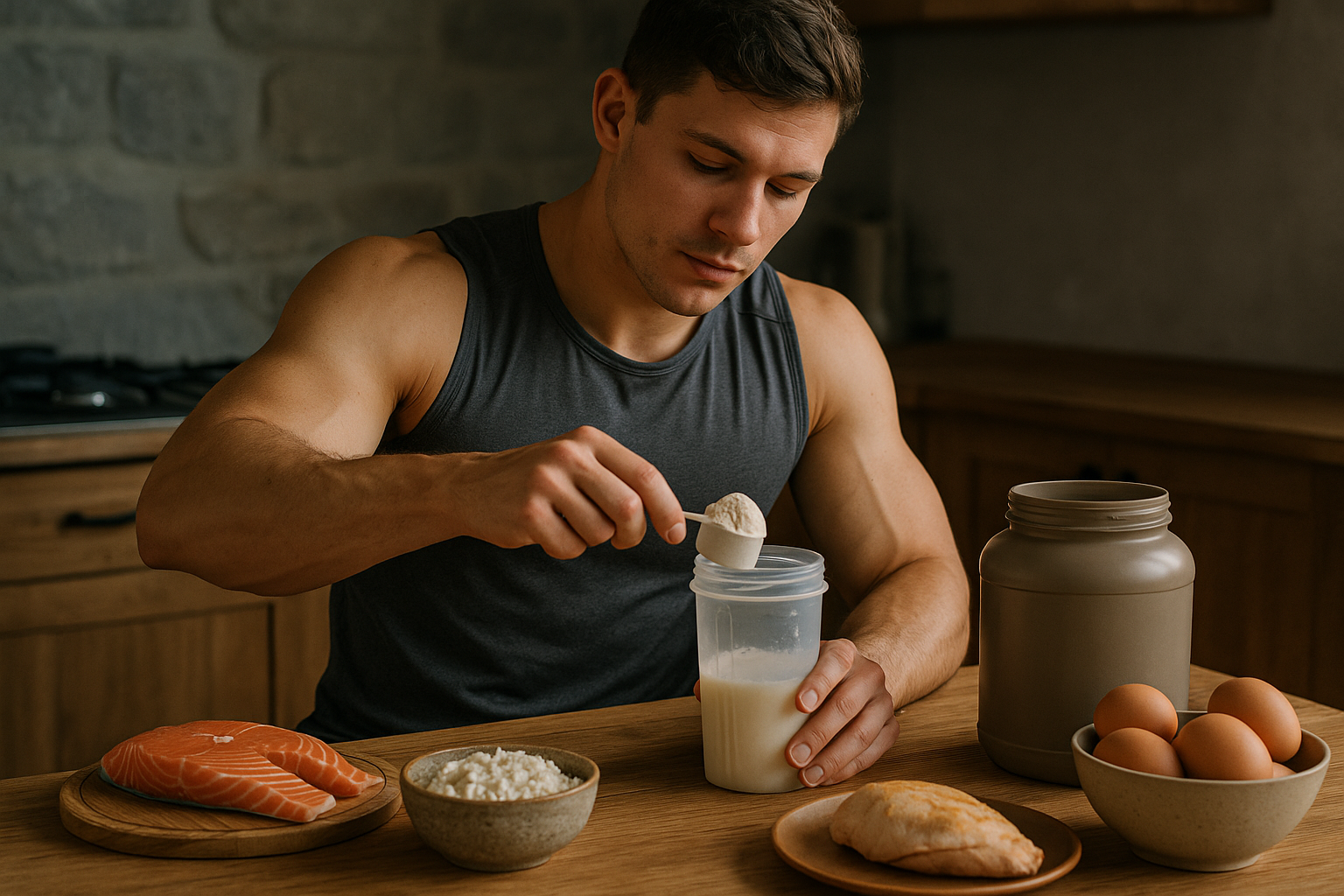
Protein intake for muscle growth is best approached through a realistic daily target, regular meals and consistent resistance training. This guide is for generally healthy adults; someone with a condition affecting protein needs should use individual clinical advice.
Daily protein
The ISSN position stand places most exercising adults within a daily range of 1.4–2.0 grams per kilogram of body weight. This is a planning range, not a promise of muscle gain or a requirement to hit an exact number every day. Training, energy intake and recovery also matter.
A meta-analysis of resistance-training trials estimated a plateau in additional lean-mass benefit around 1.6 g/kg/day on average. That population estimate does not define a precise ceiling for every individual. Start with a sustainable intake within the guidance range rather than assuming more is always better.
Per-meal distribution
Spreading protein-containing foods across breakfast, lunch, dinner and an optional snack is a practical way to meet a daily total. The ISSN discusses approximately 20–40 grams per serving for many adults and doses distributed across the day, while noting that needs vary with age, size and exercise.
Do not treat this as a rigid meal schedule. If breakfast contains little protein and dinner carries nearly the entire total, adding yoghurt, tofu or another preferred food earlier may make the target easier to reach. Evidence about a short-term muscle-protein-synthesis response does not establish that one exact distribution guarantees superior long-term growth.
Protein quality
Protein source quality is a vital consideration in muscle development. High-quality proteins typically contain all essential amino acids in sufficient quantities, which are imperative for muscle repair and hypertrophy. Meat, dairy, eggs and soy foods supply essential amino acids. Other plant foods differ in amino-acid proportions and digestibility, so variety and sufficient total intake are useful considerations. Nevertheless, varied combinations of plant proteins can provide a complete amino acid profile, making plant-based diets compatible with muscle growth goals. Selecting diverse and nutrient-dense protein sources ensures that muscle-building requirements are met without relying solely on animal products.
Timing
The role of protein timing relative to exercise is often discussed, but current evidence suggests it plays a secondary role compared to total protein intake. A systematic review of protein intake and timing found that protein supplementation improved lean body mass regardless of when protein was consumed. This suggests that while consuming protein near training sessions may provide marginal benefits, ensuring sufficient total daily protein is the primary driver of hypertrophy. Therefore, individuals should prioritize meeting daily protein targets over focusing on strict intake windows around workouts.
Practical examples
To illustrate practical application, consider a 70-kg adult engaged in resistance training. To align with research-backed recommendations, their daily protein intake should range between 1.4 and 2.0 grams per kilogram, equating to 98 to 140 grams of protein per day. For illustration, a target of 1.6 g/kg would provide 112 grams daily for that person. This calculation is a starting example, not an individual prescription. This can be divided into approximately three to five meals, each containing 20 to 40 grams of protein, incorporating sources such as lean meats, dairy, legumes, tofu, or mixed plant proteins. Read food labels to estimate amounts, then adjust portions to your preferences. If progress stalls, review the training programme, energy intake and sleep as well as protein; a plateau is not automatically evidence that your protein intake is too low.
FAQs
Is protein timing important?
While consuming protein around workouts can be beneficial, studies show that total daily protein intake has a more substantial impact on muscle growth than precise timing of protein consumption.
Can I get enough protein from plant-based sources?
Yes. By diversifying plant-based protein sources, such as combining legumes, grains, nuts, and seeds, you can obtain all essential amino acids necessary to support muscle growth.
Do I need supplements to meet my protein needs?
Not necessarily. If your daily protein requirements can be met through whole foods, supplements are not required. They can be convenient but are not mandatory for hypertrophy.
How should protein intake be distributed across meals?
Evenly distributing protein intake across meals, typically aiming for moderate amounts (~20–40 grams per meal), helps maintain muscle protein synthesis throughout the day.
References
- ISSN: protein and exercise (2017)
- Morton and colleagues: protein supplementation and resistance training (2018)
- Wirth and colleagues: protein intake and timing (2020)
This article provides general education, not an individual nutrition prescription.