
Night weight loss supplement labels explained: this topic is increasingly relevant as these products become more common in the US market. Many consumers want to understand what these labels really mean, what’s legally required, and how those claims relate to actual scientific evidence. This article offers an impartial, US evidence-based guide to interpreting such labels, clarifies possible health risks and interactions, and honestly addresses what remains unproven about finished commercial products. It also links onward to recognised educational resources and regulatory authorities.
Reader question and scope
Readers often ask: "Are night weight loss supplements safe and effective, and what do their labels actually mean?" In the US, dietary supplements—including those marketed for overnight or night-time weight loss—are not subject to premarket approval or comprehensive testing by the Food and Drug Administration (FDA). However, specific rules govern how these products are labelled and marketed. This article reviews how to read and interpret labels on night weight loss supplements, focusing on US federal regulations, legal requirements, the limits of label claims, and what can be verified or remains uncertain in the context of consumer safety and product effectiveness.
This overview is intended for people who seek clarity before purchasing or using these products. It offers evidence-based, non-commercial guidance for making informed decisions. Those with health conditions, on medications, or pregnant/nursing should consult a healthcare provider before using any supplement, as per longstanding FDA advice (FDA 101: Dietary Supplements).
US source-backed evidence
Unlike prescription drugs, dietary supplements in the US do not require FDA approval for safety or efficacy before being sold. The Dietary Supplement Health and Education Act (DSHEA) of 1994 places responsibility for product safety and truthful labelling primarily on the manufacturer (Dietary Supplements | FDA). Supplement labels must include a "Supplement Facts" panel listing ingredients, serving size, and manufacturer details. All ingredients, including any non-active components (“Other Ingredients”), must be disclosed (Questions and Answers on Dietary Supplements | FDA).
Ingredients used before October 15, 1994 are generally considered "old dietary ingredients" and do not require premarket notification to FDA. However, any "new dietary ingredient" must be reviewed for safety at least 75 days before marketing, though this is based on evidence the manufacturer provides, not independent FDA testing. Labels must avoid claims that suggest the supplement treats, prevents, or cures specific diseases, as this would reclassify them as drugs (Is It Really FDA Approved? | FDA).
Some ingredients commonly found in night weight loss products—such as teas, herbal extracts, amino acids, and minerals—may have evidence supporting their use in controlled settings. However, conclusive data on finished products (containing unique blends at specific doses) is generally lacking.
Marketing claims versus clinical outcomes
Many night weight loss supplements feature claims like "supports metabolism while you sleep" or "helps reduce nighttime cravings." In the US, structure/function claims of this type—describing effects on the normal structure or function of the body—are permitted if they are not misleading and pre-notified to FDA. However, they must carry a clear disclaimer that the statement has not been evaluated by the FDA, and that the product is not intended to diagnose, treat, cure, or prevent any disease (Dietary Supplement Labeling Guide | FDA).
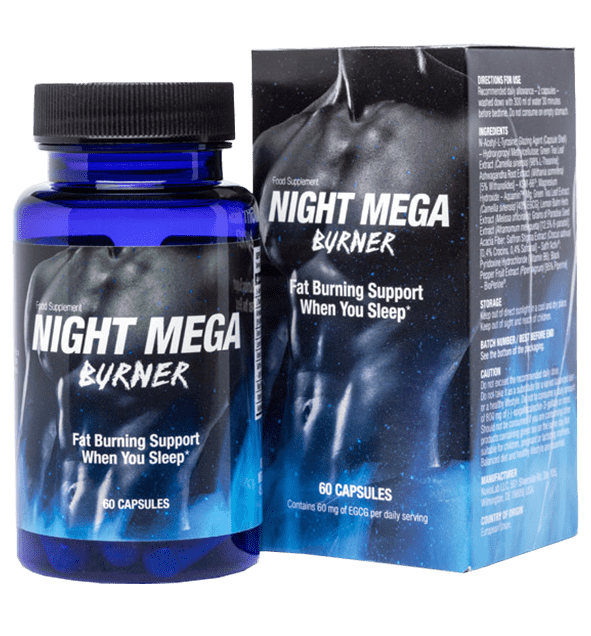
Night Mega Burner
Night-time weight-management supplement with botanical extracts and ingredients positioned around relaxation and sleep support.
Checked 1 Nov 2026
It is important for consumers to recognise that:
- Most commercial supplement claims are not supported by large-scale clinical trials on the finished product itself, but rather on studies of individual ingredients, often at higher doses or in different populations than those in commercial supplements.
- FDA and other authorities do not test supplements for effectiveness, and presence of seemingly compelling wording or graphics does not indicate approval or endorsement.
- Results observed in clinical studies may not translate directly to finished products, blends, or to all individuals.
Therefore, when interpreting night weight loss supplement labels, recognise that such claims may be based on preliminary research, animal studies, or theoretical mechanisms, and are not guarantees of individual results (FDA 101: Dietary Supplements | FDA).
Safety, interactions and limitations
Supplements—including those for night-time use—can carry risks, especially if used in combination with medications, other supplements, or in people with pre-existing medical conditions. Interactions may involve active pharmaceutical agents, herbs affecting liver metabolism, or ingredients that influence sedation or central nervous system activity.
- Supplement manufacturers must ensure product safety but are not required to offer proof before the supplement reaches the market. FDA’s oversight is largely post-market and responsive to safety concerns, inspections, or adverse event reports from consumers and health professionals (Dietary Supplements | FDA).
- There are no federal limits on serving sizes or ingredient amounts (other than certain exceptions, such as iron for children due to poisoning risk).
- Supplements can be tainted with undeclared substances, vary in quality, and are not guaranteed for batch-to-batch consistency.
- Labels may use terms like “natural,” which are not legally defined for supplements and do not guarantee safety or efficacy.
- Individuals taking sedative medications or with sleep disorders should approach night supplements especially cautiously due to the risk of excessive sedation, falls, or compounded effects.
- If you experience any unexpected symptoms after taking a supplement, discontinue use immediately and consult a healthcare provider. Both the FDA and manufacturers encourage reporting of adverse events.
Pregnant or nursing individuals, children, and older adults are advised to consult a medical professional before using these products to avoid unknown risks or harmful interactions (FDA 101: Dietary Supplements | FDA).
Related educational resources and references
For a commercial label example, see the Night Mega Burner product information and our independent Night Mega Burner review. These pages provide product-specific context, not proof of effectiveness or a recommendation to use it.
For further reading and to access up-to-date safety alerts, regulatory updates, and scientific fact sheets, consider these authoritative resources:
- FDA 101: Dietary Supplements: A practical overview for consumers.
- Dietary Supplements | FDA: Regulatory and safety information directly from the oversight authority.
- Dietary Supplement Labeling Guide | FDA: In-depth labelling regulations and legal FAQs.
- Questions and Answers on Dietary Supplements | FDA: Additional common Q&A from US regulators.
Readers interested in deeper science on any specific ingredient or supplement can search the US National Institutes of Health Office of Dietary Supplements for research-based fact sheets.
FAQs
What is actually supported by US evidence?
In the US, the FDA does not require clinical evidence of efficacy for finished dietary supplements before sale. Most evidence cited on labels relates to individual ingredients, often at variable doses and in limited populations. Claims are based on structure/function effects, not proven weight loss outcomes. See Questions and Answers on Dietary Supplements | FDA for more detail.
What risks, uncertainties or interactions should readers understand?
Supplements may interact with medicines, cause adverse effects, or not deliver consistent results. Night-time products may contain ingredients affecting sedation or sleep quality, and labelled ingredient amounts are not always independently verified by the FDA. Report any adverse reactions to both your healthcare provider and the FDA. More information at FDA 101: Dietary Supplements | FDA.
What is not proven about the finished commercial product?
The actual blend, dosing, and effectiveness of night-time weight loss supplements as sold is not proven through FDA-reviewed clinical trials. Differences in formulation, manufacturing, and dose mean that claims on the package do not guarantee individual results or verified safety.
Which existing FitnessScopes pages offer distinct additional context?
Please check FitnessScopes’ separate ingredient-specific articles and safety guides for in-depth discussions of individual components and evidence-based advice. This page focuses on label interpretation and US regulations only.
References
No commercial endorsement is made or implied. Information is for educational purposes only.