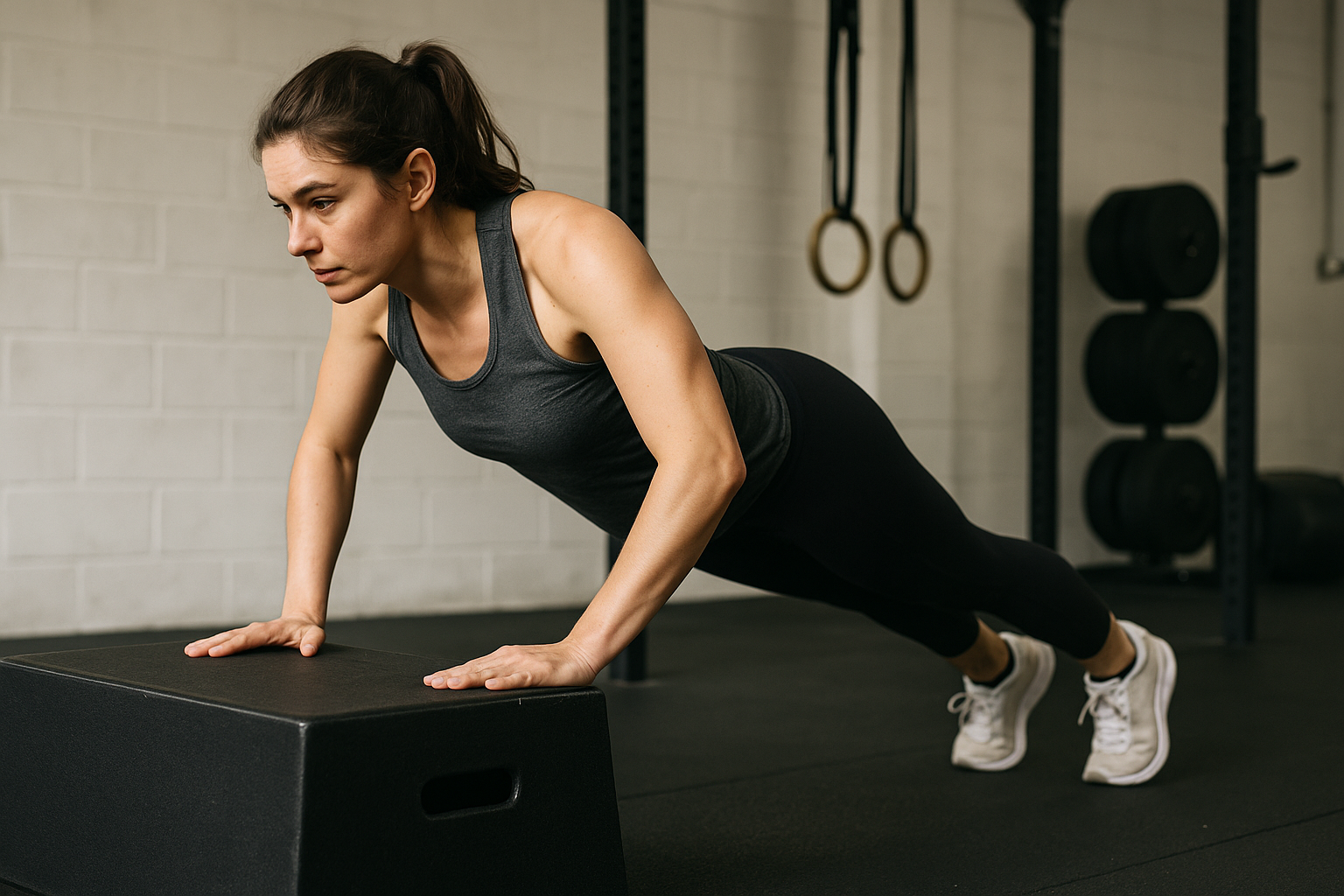
Bodyweight exercise progression allows adults to steadily increase the difficulty of their training using only their own bodies for resistance. This approach is especially practical for those without access to gym equipment, and can be adapted by anyone regardless of starting fitness level. Safe and effective progression requires understanding of overload principles, careful monitoring of technique, and respect for individual recovery limits. Recent research demonstrates how variations and systematic challenge in bodyweight movements, such as push-ups, can lead to significant strength and muscle gains, yet it is important to apply progressions methodically and in context (see Kikuchi & Nakazato, 2017; Kotarsky et al., 2018).
Progressive Overload Without Weights
The key to building muscle and strength with bodyweight exercises is progressive overload—the practice of gradually increasing demand on the musculoskeletal system. Even without external weights, you can systematically challenge yourself by altering exercise variables such as body angle, tempo, leverage, range of motion, or repetitions. Both peer-reviewed trials and expert guidance recommend adjustments tailored to your capability and goals (American College of Sports Medicine, 2011).
- Increase mechanical load: Progress from easier to harder variations (e.g. knee push-ups to standard push-ups).
- Adjust volume & intensity: Change sets, repetitions, or rest periods.
- Modify exercise leverage: Move limbs, change body position, or increase range for added challenge.
Research has found that push-ups with progressive variables can offer strength improvements comparable with traditional free weights, at least in young, healthy men over weeks of focused training (Kikuchi & Nakazato, 2017).
Establishing a Baseline
Before increasing challenge, it is crucial to establish a personal baseline. This means assessing your ability to perform a given exercise in perfect form. For example, determine the maximum number of push-ups, squats, or inverted rows you can execute with correct posture and control.
A practical baseline might be:
- The maximum reps of one exercise done with perfect technique.
- The furthest depth achieved with good form (for example, a squat as low as possible without rounding the back).
- Assessment of apparent fatigue and technique breakdown.
This self-assessment provides a reference point for progression and helps identify the most appropriate entry-level variation. Consult an experienced trainer or physiotherapist if you have injuries or health concerns.
Changing Leverage and Range
One of the safest and most effective ways to increase difficulty is by altering leverage or the range of motion. By changing your body position or the angle of your joints, you can increase the proportion of your weight that the target muscles must move. For example:
- Moving from inclined (hands elevated) push-ups to standard to decline (feet elevated) push-ups.
- Squats: From partial squats to parallel, then full/deep squats, or adding single-leg variations.
- Rows: Switching from knees bent and feet flat (easier) to legs extended and heels on the ground (harder).
In studies, these progressive variations were used to keep training challenging as participants adapted (Kotarsky et al., 2018). Each change in leverage or range should be tackled only when you can perform the prior step for the desired reps with sound technique.
Repetitions and Tempo
Another critical method of progressing bodyweight exercises is manipulating repetitions and tempo (speed of movement):
- Repetitions: Increasing reps is an accessible way to overload once you can perform the current level with good form. For muscular strength, focus on more challenging variations with lower reps; for muscular endurance, emphasise higher reps.
- Tempo: Slowing down the lowering (eccentric) phase increases time under tension, stimulating muscle adaptation. For example, a 4-second lower, brief pause, and a controlled push up.
Research indicates that increasing repetitions or employing different tempos as part of progressive bodyweight training can be as effective as comparable-load weight training at inducing upper body strength gains in some populations (Kikuchi & Nakazato, 2017).
Sample Progression
Here’s an illustrative progression for bodyweight push-ups:
| Phase | Variation | Goal Reps | Cues |
|---|---|---|---|
| 1 | Inclined (hands on bench) | 12–15 | Chest to bench, straight body |
| 2 | Knee push-up | 10–15 | Full range, slow eccentric |
| 3 | Standard push-up | 8–12 | Chest near floor, elbows at 45° |
| 4 | Feet elevated | 6–10 | Rib cage down, neutral spine |
| 5 | Archer or single-arm push-up (assisted) | 4–8/side | Even control left/right |
This progression is illustrative—not prescriptive—and should be adjusted for individual needs, capacity, and technique. Only move to the next variation when form is rock-solid throughout the recommended rep range.
Tracking and Recovery
Consistent progress in bodyweight training relies on monitoring your sessions, varying overload, and ensuring adequate rest:
- Track: Keep a record of sets, reps, variations, and subjective effort or RPE (Rating of Perceived Exertion).
- Rest: The American College of Sports Medicine recommends at least 48 hours between intense sessions for the same muscle group (ACSM, 2011).
- Adaptation: Only progress in difficulty when you meet volume and quality benchmarks without compensating with poor form.
Listen to your body; persistent soreness, joint pain, or declining performance may indicate a need for more recovery, regression, or professional advice.
Safety and Considerations
Bodyweight training is accessible and generally safe for most healthy adults, but risks still exist if progressions are rushed or technique falters. To maximise safety:
- Prioritise joint alignment and full control at all times.
- Progress exercises only when the requisite strength and mobility are demonstrated at the current level.
- Warm up thoroughly, and include flexibility and neuromotor (balance, agility) work as per international guidelines (ACSM, 2011).
- If managing chronic condition or recent injury, medical or physiotherapy supervision is advised.
If dizziness, chest pain, or sharp joint pain occurs, cease exercise immediately and consult a healthcare professional.
FAQs
How can difficulty increase without weights?
Difficulty in bodyweight exercises increases through biomechanical changes, such as shifting leverage (e.g., elevating feet in push-ups), increasing movement range, manipulating tempo, or adding repetitions. Systematic progression challenges muscles similarly to external resistance.
When should a progression change?
A progression should change when you can perform all sets and repetitions at the current level with perfect form and without excessive fatigue. Consistently achieving the target volume over multiple sessions typically signals readiness to progress.
Are bodyweight exercises as effective as weighted ones for strength?
For upper-body strength, studies have shown that progressive bodyweight training (like push-up variations) can result in comparable gains to light-to-moderate resistance training in young males, though results may differ in other populations and exercise types.
How often should bodyweight exercises be performed?
International guidelines recommend 2–3 resistance sessions per week for each major muscle group. Adequate recovery between sessions is crucial for adaptation and injury prevention.
References
- Low-load bench press and push-up induce similar muscle hypertrophy and strength gain.
- Effect of Progressive Calisthenic Push-up Training on Muscle Strength and Thickness.
- American College of Sports Medicine position stand. Quantity and quality of exercise for developing and maintaining cardiorespiratory, musculoskeletal, and neuromotor fitness in apparently healthy adults: guidance for prescribing exercise.
Affiliate disclosure: FitnessScopes may earn commissions from links in this article if you click and make a purchase. This does not affect editorial content or independence.