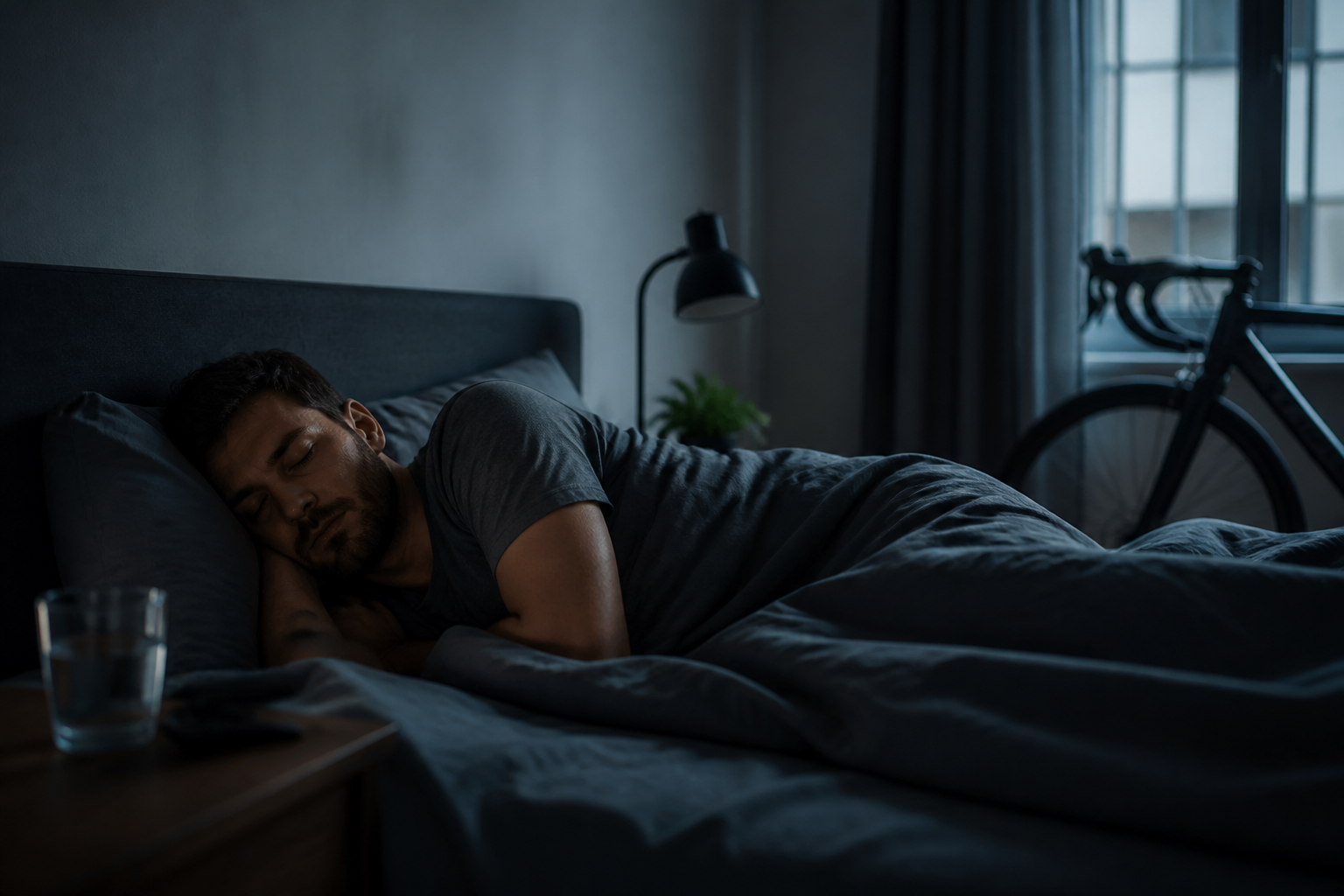
Sleep and performance
Research in athletes links insufficient or disrupted sleep with poorer reaction time, mood and some measures of physical performance. The size of the effect varies by task and by how much sleep is lost.
Sleep and recovery
Sleep supports normal physiological regulation and provides an extended period with low physical demand. It should be considered alongside nutrition and training load rather than treated as a separate “biohack”.
How much sleep?
Adults are commonly advised to obtain at least seven hours regularly, but individual needs vary and athletes may benefit from greater sleep opportunity during heavy training. The useful target is enough sleep to support daytime function and recovery consistently.
Training can affect sleep
Regular exercise is generally associated with better sleep, but very late intense sessions can make sleep onset harder for some people. Individual response matters; there is no need to ban evening training if it does not disrupt your sleep.
Consistency
A regular wake time and sufficient sleep opportunity are high-value habits. Large swings between very short weekday sleep and long weekend lie-ins can make routines harder to stabilise.
Caffeine
Caffeine can improve exercise performance, but it can also delay sleep or reduce sleep quality, especially when consumed later in the day. Its half-life is several hours and sensitivity varies widely. A pre-workout taken in the evening can therefore create a trade-off between that session and subsequent sleep.
Alcohol
Alcohol may make someone feel sleepy initially but can disrupt sleep architecture and recovery. It should not be used as a sleep aid.
Naps
A short daytime nap can improve alertness after inadequate sleep. Longer or late naps may interfere with nighttime sleep for some people. Napping is a tool, not a substitute for routinely sufficient nighttime sleep.
Practical sleep habits
- Protect enough time in bed.
- Keep wake time reasonably consistent.
- Use a dark, quiet and comfortable sleep environment.
- Consider the timing of caffeine.
- Use a wind-down routine that reduces stimulating tasks before bed.
- Get daylight exposure and regular daytime activity.
What if one night is bad?
Do not panic or compensate with extreme changes. If possible, adjust expectations for a technically demanding or maximal session, use normal meals and hydration, and return to the usual sleep schedule. One poor night is different from chronic restriction.
When to seek help
Persistent insomnia, loud snoring with breathing pauses, excessive daytime sleepiness or other ongoing sleep problems warrant medical assessment. Sleep hygiene advice is not a replacement for diagnosing a sleep disorder.
FAQs
Can you build muscle with poor sleep?
Training can still produce adaptation, but chronic insufficient sleep is not an optimal recovery environment.
Should I skip training after a bad night?
Not automatically. Consider how you feel and the risk or technical demands of the planned session.
Is eight hours mandatory?
No single duration is perfect for everyone. Adults generally need at least seven hours regularly, and individual needs vary.
Can a sleep supplement replace sleep habits?
No. Supplements cannot create sufficient sleep opportunity or diagnose underlying sleep problems.
How to apply this in your programme
Use the principle in this guide as one part of a complete training plan rather than as an isolated rule. Start with a workload you can perform with consistent technique, record what you actually complete, and make small changes only when recovery and performance support them. Progress can come from additional repetitions, slightly more resistance, greater range of motion, better control, longer duration or more demanding exercise selection depending on the goal.
A useful programme also separates hard sessions with enough recovery and keeps the majority of weekly work repeatable. If performance falls sharply from session to session, soreness consistently interferes with normal training, or technique deteriorates, adding more work is unlikely to be the best first response.
Tracking progress without overcomplicating it
Choose a small number of measures that match the goal. For resistance training, useful records include exercise, load, repetitions, sets and perceived effort. For aerobic work, duration, distance, pace or power and session effort can provide context. Mobility work is better judged by whether the required movement becomes more comfortable and controllable, not simply by forcing a larger passive range.
Compare trends across several sessions rather than treating one unusually good or bad workout as proof that the programme is working or failing. Sleep, stress, heat, nutrition and accumulated fatigue can all influence a single session.
Common mistakes
- Changing several training variables at once, making it difficult to identify what helped.
- Adding volume simply because a session felt easy rather than following a planned progression.
- Copying advanced routines before building tolerance to the basic movements and weekly workload.
- Using soreness as the main measure of training quality.
- Ignoring pain or repeatedly training through a movement that cannot be performed with reasonable control.
When to modify the plan
Training should be adjusted to the individual. Exercise selection can be changed around equipment, experience and movement limitations while preserving the underlying training goal. Persistent or worsening pain, unexplained loss of function, chest pain, fainting or other concerning symptoms are reasons to stop relying on generic online programming and seek appropriate professional assessment.