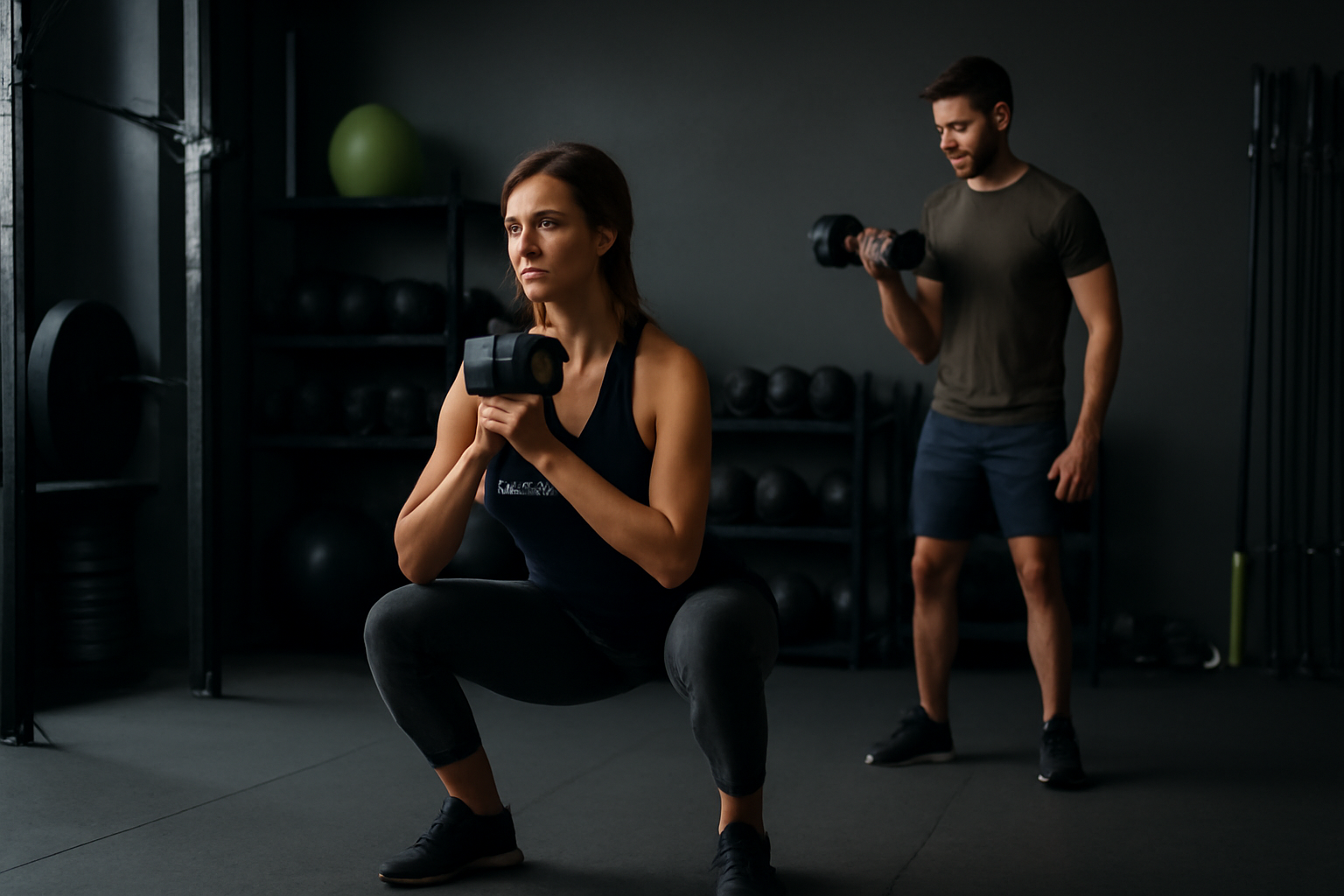
Strength training does not need to be complicated. For a beginner, the priorities are learning a small number of movement patterns, training them consistently, using loads you can control, and gradually asking your muscles to do more over time.
Current public-health guidance recommends muscle-strengthening work for all major muscle groups on at least two days each week. The American College of Sports Medicine's 2026 resistance-training update also emphasises that consistency matters more than complicated programming for most healthy adults.
What counts as strength training?
Strength or resistance training means working your muscles against resistance. That resistance can come from barbells and dumbbells, machines, resistance bands, cable stacks or your own bodyweight. You do not need a gym to begin.
A useful beginner programme normally covers the main movement patterns rather than dozens of individual exercises:
- Squat or knee-dominant: goblet squat, leg press or bodyweight squat.
- Hip hinge: Romanian deadlift, kettlebell deadlift or hip hinge variation.
- Horizontal push: push-up, machine chest press or dumbbell bench press.
- Horizontal pull: cable row, machine row or dumbbell row.
- Vertical push: overhead press or machine shoulder press.
- Vertical pull: lat pulldown or an assisted pull-up.
- Core/carry: plank, dead bug, Pallof press or loaded carry.
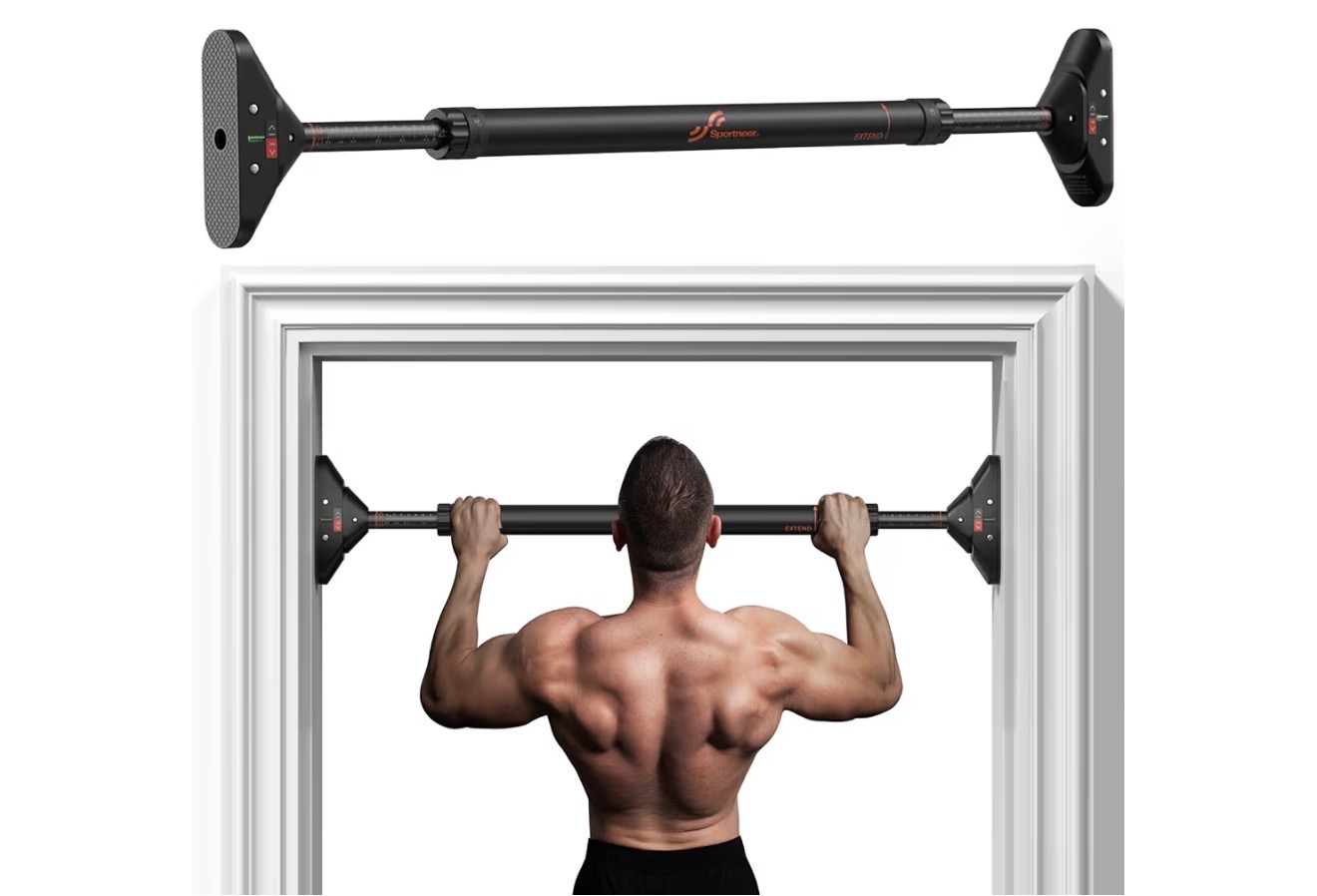
Doorway pull-up bar
A doorway pull-up bar for upper-body training. Check doorway compatibility, installation instructions and maximum supported load before use.
Check price on Amazon
See the current price and availability on Amazon before ordering.
Affiliate link. We may earn a commission at no extra cost to you.
How often should a beginner strength train?
Two full-body sessions per week is a practical starting point for many beginners. A third session can be added when your schedule, recovery and technique allow. This gives you repeated practice without requiring you to train every day.
The World Health Organization recommends muscle-strengthening activities involving all major muscle groups on two or more days per week for adults. That is a health guideline rather than a bodybuilding prescription, but it provides a sensible minimum framework.
A simple beginner full-body programme
This example is deliberately simple. It is not a personalised prescription; choose exercises that suit your equipment, mobility and experience.
| Exercise | Sets | Reps | Beginner focus |
|---|---|---|---|
| Goblet squat or leg press | 2–3 | 8–12 | Controlled depth and stable position |
| Romanian deadlift | 2–3 | 8–12 | Learn the hip hinge before adding load |
| Chest press or push-up | 2–3 | 8–12 | Smooth repetitions with good control |
| Seated/cable row | 2–3 | 8–12 | Keep the torso controlled |
| Overhead press | 2 | 8–12 | Use a manageable range and load |
| Plank or dead bug | 2 | 20–40 sec / 6–10 per side | Maintain position rather than chasing fatigue |
Perform this on two non-consecutive days initially. You can use different exercises that train the same patterns if they are more comfortable or accessible.
How heavy should you lift?
Use a load that makes the set challenging while still allowing controlled technique. Beginners do not need to test a one-repetition maximum or take every set to complete muscular failure.
A practical approach is to finish most early sets feeling that you could have completed a few more good repetitions. As technique becomes reliable, effort can gradually increase. ACSM's current guidance notes that advanced methods such as training to momentary failure are not required for the average healthy adult to make progress.
How to progress without guessing
Progressive overload simply means increasing the training challenge over time. That does not mean adding weight every workout.
- Choose a repetition range, such as 8–12.
- Start with a weight you can control for the lower end of that range.
- Over subsequent sessions, add repetitions while maintaining good technique.
- When you can complete the top of the range across your planned sets, make a small increase in resistance.
- Repeat the process rather than making large jumps.
You can also progress through better technique, a greater comfortable range of motion, an additional set or a more difficult exercise variation. Read our progressive overload guide for the full explanation.
How long should you rest between sets?
Rest long enough that you can perform the next set with useful technique and effort. Short rests are not automatically better. Larger compound movements often require more recovery than smaller isolation exercises. Beginners should avoid turning every resistance-training session into a race.
For a deeper explanation, see Rest Between Sets Explained.
Technique comes before load
Your first few weeks are partly skill practice. Use repeatable setups, controlled repetitions and an exercise range you can perform comfortably. If adding weight causes technique to deteriorate substantially, the increase was probably premature.
Machines can be useful for beginners because they reduce some stability demands. Free weights are also effective when used appropriately. There is no requirement to choose one exclusively; ACSM's 2026 evidence review found that a specific equipment type was not consistently decisive for outcomes in the average healthy adult.
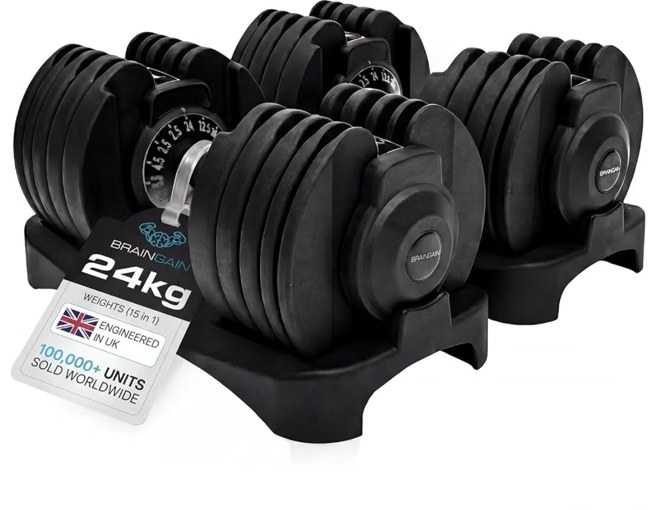
Adjustable dumbbells
Adjustable dumbbells for strength training at home. Check the seller listing for weight range, adjustment mechanism and dimensions before buying.
Check price on Amazon
See the current price and availability on Amazon before ordering.
Affiliate link. We may earn a commission at no extra cost to you.
Common beginner mistakes
- Doing too much too soon: more exercises and more days are not automatically more productive.
- Changing the programme every week: repetition gives you a chance to learn movements and measure progress.
- Adding load before controlling the exercise: progression only helps if the movement remains useful.
- Taking every set to failure: this can add fatigue without being necessary for beginner progress.
- Ignoring recovery: training is the stimulus; adaptation also depends on time between sessions, nutrition and sleep.
- Only training favourite muscles: a balanced programme should cover the major muscle groups.
Strength training, cardio and general health
Strength training is one part of physical activity, not a replacement for all other movement. WHO guidance for adults also recommends 150–300 minutes of moderate-intensity aerobic activity per week, or 75–150 minutes of vigorous activity, or an equivalent combination. Strength and aerobic training can therefore sit in the same weekly routine.
Recovery and nutrition basics
You do not need a complicated supplement stack to begin strength training. A consistent training programme, adequate overall nutrition, sufficient protein, sleep and recovery are the fundamentals. Our guide to muscle recovery explains how the pieces fit together.
Muscle soreness is not a score for workout quality. New exercises can make you sore, but the goal is productive training you can repeat, not maximising discomfort.
When should you get professional advice?
If you have an injury, significant pain, a health condition that affects exercise, are returning after surgery, or are unsure whether resistance training is appropriate for you, seek individual guidance from a suitably qualified healthcare or exercise professional. Stop an exercise if it causes sudden or concerning pain.
Beginner checklist
- Train the major muscle groups at least twice per week.
- Start with a small, repeatable exercise selection.
- Learn technique before chasing heavier loads.
- Record your sets, repetitions and resistance.
- Progress gradually rather than changing everything at once.
- Allow recovery between hard sessions.
- Keep aerobic activity and everyday movement in your overall routine.
The bottom line
A good beginner strength programme is intentionally uncomplicated. Train the major movement patterns consistently, use manageable resistance, practise good technique and gradually progress. The programme you can repeat for months is more valuable than an advanced routine you cannot sustain.
Frequently asked questions
Can I start strength training with no gym experience?
Yes. Bodyweight exercises, bands, machines and free weights can all provide resistance. Start with movements you can perform comfortably and learn them before increasing difficulty.
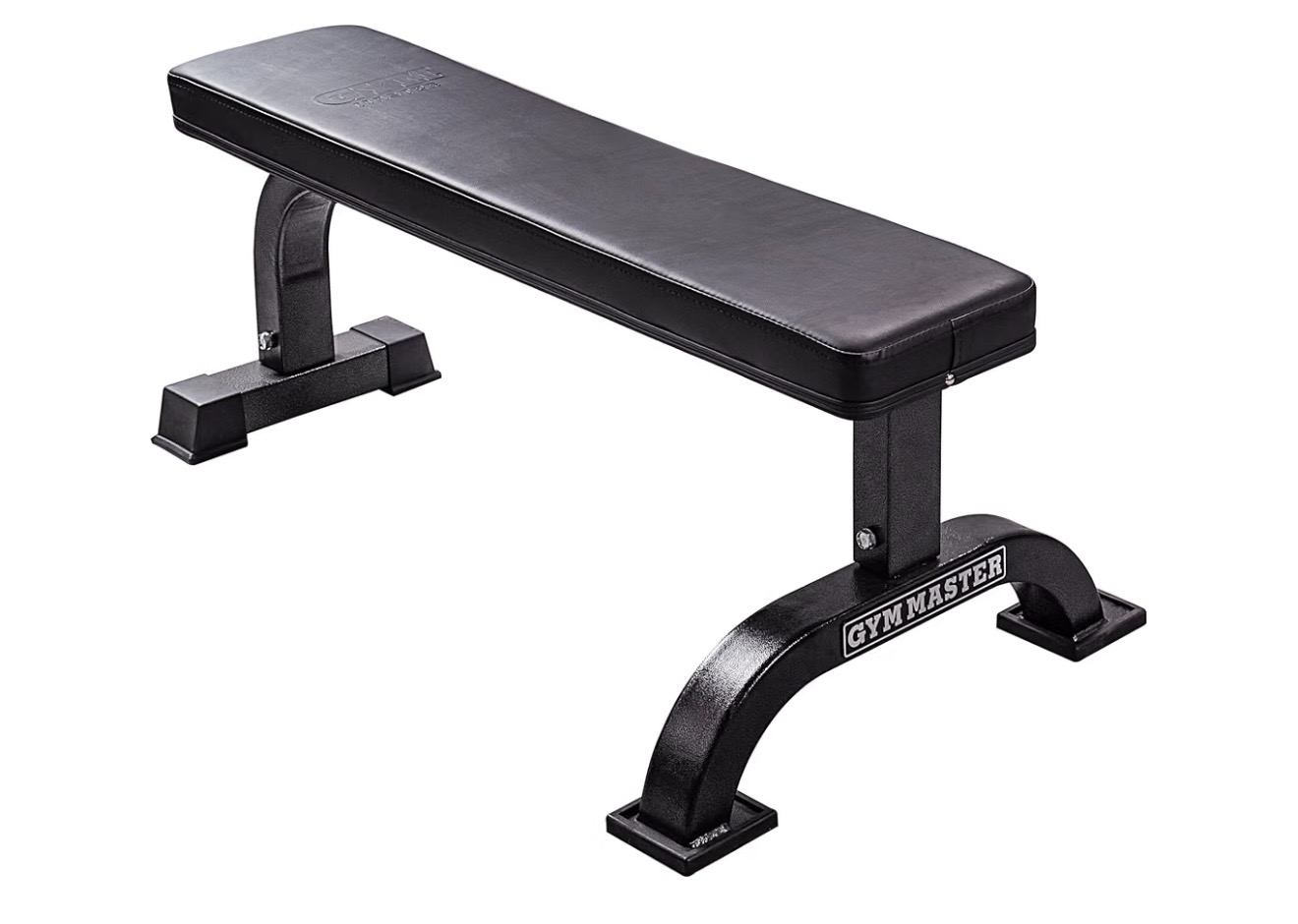
Flat weight bench
A flat exercise bench for home resistance training. Check the seller's maximum load rating, dimensions and assembly requirements.
Check price on Amazon
See the current price and availability on Amazon before ordering.
Affiliate link. We may earn a commission at no extra cost to you.
Is two days per week enough?
Two days can be a useful starting schedule and aligns with public-health guidance to strengthen all major muscle groups on at least two days per week. Your optimal frequency can change with your goals and experience.
Do beginners need to train to failure?
No. Current ACSM guidance indicates that momentary muscle failure is not necessary for the average healthy adult to obtain resistance-training benefits.
How quickly should I add weight?
There is no fixed timetable. Increase resistance when you can repeatedly complete your target repetitions with controlled technique and the current load no longer provides the intended challenge.
Continue learning
Useful FitnessScopes calculators
Related interactive tools: