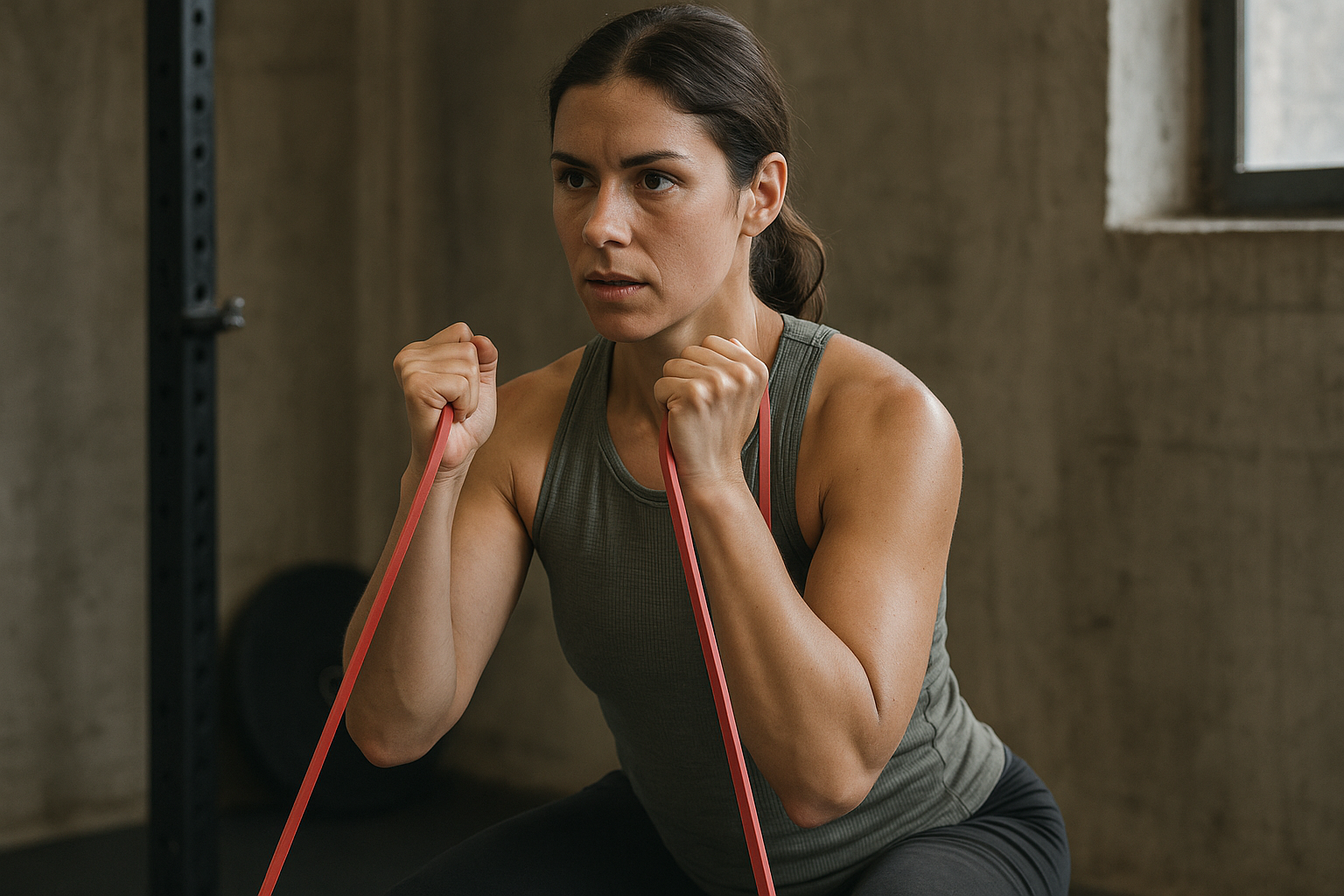
Resistance bands for strength training have become a practical option for adults seeking adaptable, evidence-informed fitness solutions. Bands offer portable, scalable resistance, supporting both upper- and lower-body exercises and aiding rehabilitation or general fitness. While traditional weights remain gold standard for muscle hypertrophy at advanced levels, studies show that elastic bands can meaningfully improve muscle strength, function and physical performance, especially when tailored to needs such as rehabilitation, older adults or those starting strength routines. This article explores how resistance bands work, how to choose the right band for your goals, effective exercises, session design, and practical limitations, using recent peer-reviewed evidence.
How Resistance Bands Work
Resistance bands produce force when stretched, offering continuous tension throughout an exercise’s movement. Unlike free weights, which depend on gravity, bands generate resistance both in standard and unconventional planes. This characteristic is valuable for joint-friendly movements, gradually rebuilding strength after injury, and providing useful variety in resistance profiles. For instance, in rehabilitation settings for ankle instability or sarcopenia (muscle loss with ageing), resistance band exercises enhance proprioception – the body’s awareness of movement and position – and muscle activation (see Yekdaneh & Mutlu, 2024 and Seo et al., 2021). Bands can deliver variable resistance, increasing load as they stretch, which can reduce joint strain compared to starting a lift with a heavy static load. However, total resistance may plateau at a lower maximum than barbells or machines.
Choosing Band Resistance
Resistance bands come in various tensions, often coded by colour or thickness. Selecting the right band involves matching resistance to your current strength and target muscle group. International studies trialled band-based sessions for older adults and those with mobility or stability issues, finding that moderate-intensity, progressively challenging bands (used in sets lasting 40–60 minutes, three or more times each week, over at least 12 weeks) supported muscle strength improvement and functional gains (Zhao et al., 2022). For new users, it’s advisable to start with a low-to-moderate resistance band, aiming for about 8–15 challenging repetitions per set with good technique. As strength increases, move to bands with more tension or combine bands to increase difficulty. The lack of standardised tension markings across brands means trial and error or guidance from a professional may be required, particularly when replicating free-weight benchmarks.
Upper-Body Movements
Resistance bands can effectively stimulate upper-body muscles through pressing, rowing, and fly variations. Examples include:
- Rows: Attach the band to a fixed anchor, grip both ends, and draw elbows backward to target mid-back and biceps.
- Chest Presses: Anchor the band behind you, press handles or loops forward for chest and triceps engagement.
- Shoulder Presses: Stand on the band, hold ends at shoulder height, and press overhead.
- Biceps Curls: Stand on the band, curl ends upward to work the front of the arm.
- Triceps Extensions: Overhead or anchored options help develop the back of the arms.
Trials on resistance band training in older adults found significant improvements in grip strength and functional upper limb power, though bands may offer lower maximum resistance compared to free weights (Zhao et al., 2022). For rehabilitation, such as recovering ankle or wrist injuries, bands’ lower, controlled resistance can aid proprioception and gentle strength return (Yekdaneh & Mutlu, 2024).
Lower-Body Movements
Bands are versatile for lower-body and core exercises. Practical options include:
- Squats: Stand on the band, hold ends at shoulder level, and perform squats to load quadriceps, glutes, and hamstrings.
- Lunges: Place the band beneath the front foot, hold ends at shoulder height, and lunge to strengthen the lower limbs.
- Hip Abductions: Use a loop band around the knees or ankles to engage the outer hips and glutes.
- Deadlift Variations: Stand on the band, grasp ends, and hinge at the hips to activate posterior chain muscles.
Studies indicate that band-based lower-body exercises improve gait speed, balance, and strength, making them accessible for those addressing sarcopenia, stability issues or general mobility goals (Seo et al., 2021; Ghiotto et al., 2022).
Sample Full-Body Session
A well-rounded session with resistance bands could include:
- Squats with band (12-15 reps)
- Seated or standing rows (10-15 reps)
- Chest press (10-15 reps)
- Lateral band walks (10-15 steps each direction)
- Shoulder press (10-12 reps)
- Standing hip abduction (12 reps each leg)
- Biceps curl and triceps extension superset (10-12 reps each)
Complete two to three rounds with 1-2 minutes rest between sets. Adjust resistance or repetitions to ensure the final reps are challenging but maintain good form.
Progression and Limitations
Progressing with bands involves increasing resistance (using thicker bands or combining bands), raising repetitions or sets, or performing exercises more slowly to increase tension time. Evidence from multiple clinical studies shows resistance band training improves muscle quality, strength, and functional outcomes in older adults and those with reduced mobility. However, elite strength gains, power development, and muscle hypertrophy may be more limited than with heavy free weights or machines. For intermediate-to-advanced lifters, bands may complement, rather than replace, high-load strength training. In meta-analyses, band sessions of 40–60 minutes, three times per week over 12–16 weeks, provided significant benefits in older adults, but the gains may plateau relative to traditional weight training at higher loads (Zhao et al., 2022; Fernandez-Garrido et al., 2026).
Safety and Considerations
Resistance bands have a strong safety profile, particularly for those new to exercise, older adults, or individuals in rehabilitation. They offer joint-friendly, scalable resistance and low fall or crush injury risk compared to heavy weights. Still, ensure bands are checked routinely for wear, fraying or tears, and anchored securely before use. Sudden snapping can cause injury. Beginners and anyone with a history of joint instability should start with professional instruction and controlled movements. If using a band during balance exercises, such as ankle rehabilitation, ensure the set-up supports your posture and reduces fall risk (Yekdaneh & Mutlu, 2024).
FAQs
What can resistance bands train?
Resistance bands can strengthen all major muscle groups, including arms, shoulders, chest, back, core, glutes, and legs. With the right exercises, they address both upper- and lower-body training needs and can also be used for balance, coordination, and mobility work.
How can resistance progress?
Strength progression with resistance bands comes from using thicker bands, increasing repetitions or sets, combining bands, or manipulating the movement (slowing tempo, increasing range of motion). Progress is usually marked by completing more reps with good form before moving to a higher tension band.
Are resistance bands effective for older adults?
Evidence shows resistance band training improves strength, mobility, and physical function in older adults, especially those with sarcopenia or reduced mobility. Bands can be a suitable alternative where free weights are impractical or unsafe, but improvements may plateau at advanced fitness levels.
Are there any risks or precautions?
Resistance bands are generally safe but can cause injury if they snap or are used carelessly. Always inspect bands for damage, anchor them securely, and perform exercises with control. Those with chronic injuries or health conditions should consult a qualified professional before starting a programme.
References
- Effects of Balance and Strength Training for Ankle Proprioception in People with Chronic Ankle Instability
- Effects of 16 Weeks of Resistance Training on Muscle Quality and Muscle Growth Factors in Older Adult Women with Sarcopenia
- The Effect of Resistance Training on the Rehabilitation of Elderly Patients with Sarcopenia: A Meta-Analysis
- Effects of high-load, velocity-intentional variable resistance training combined with creatine supplementation on neuroplasticity, oxidative stress, inflammation, physical function, cognitive performance and quality of life in older adults
- Exercise and physical performance in older adults with sarcopenic obesity: A systematic review
FitnessScopes may earn a commission if you purchase products via links in this article. This does not affect our editorial standards.