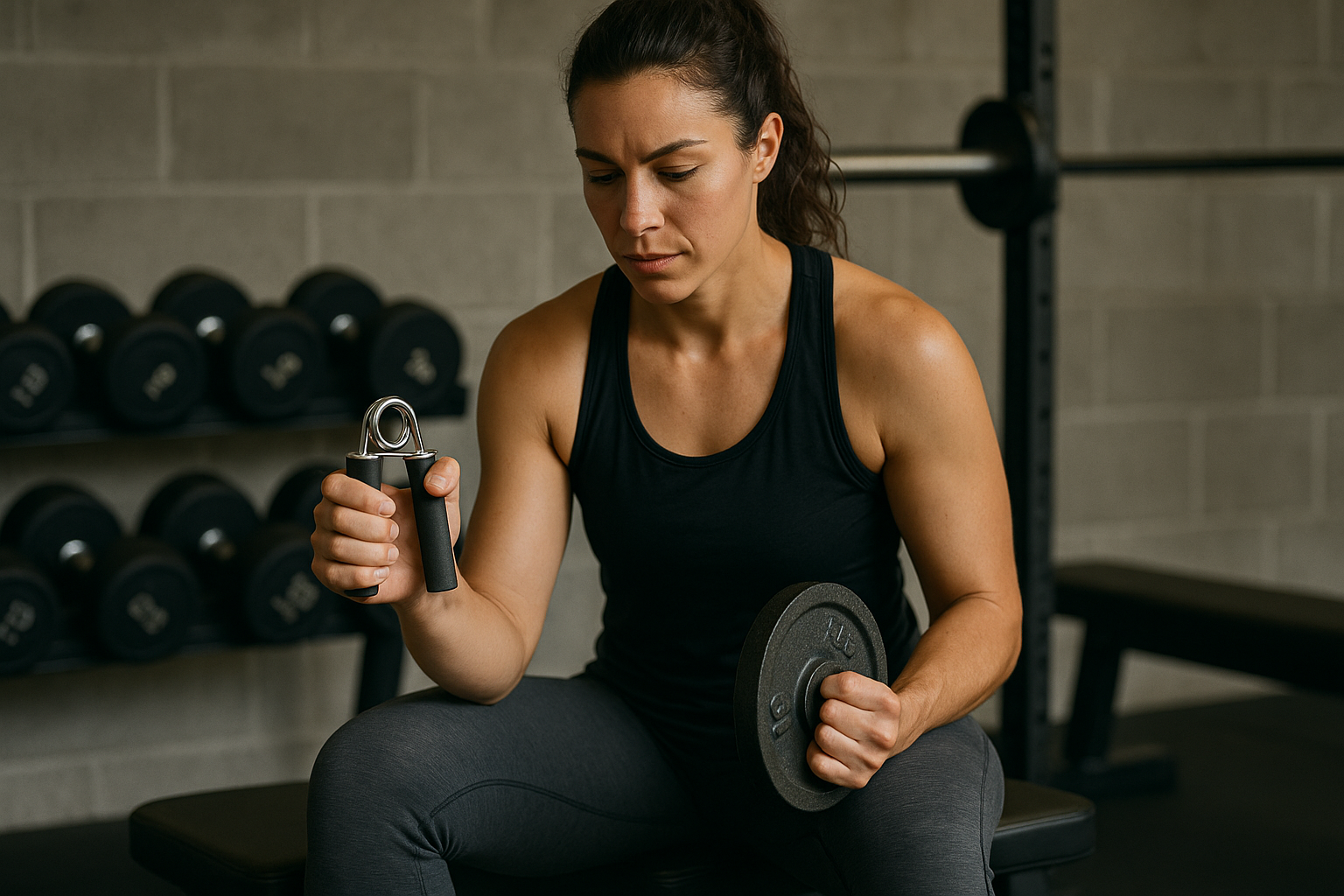
Developing a stronger grip is essential for daily function and overall athletic performance, yet few fully understand how to improve grip strength efficiently and safely. Whether you're picking up groceries, climbing, lifting weights, or just aiming to counteract age-related decline in muscle function, grip strength plays a vital role. This guide will explore evidence-based approaches for enhancing grip strength through targeted exercises, optimal training frequency, and robust recovery strategies, especially for adults seeking practical, reliable forearm training guidance.
Types of Grip Strength
Grip strength is not a single, uniform quality—it includes several subtypes, each engaging different muscles and movement patterns:
- Crush grip: The force applied when you squeeze an object between your fingers and palm, as in a handshake or squeezing a stress ball.
- Pinch grip: Used when holding an object between your fingers and thumb (e.g., holding a key).
- Support grip: Involves sustaining a hold over time, such as hanging from a bar or carrying a heavy bag.
- Extension grip: The ability to open your hand against resistance, less often targeted but essential for overall forearm conditioning.
Research has validated the importance of these grip variations in functional fitness and daily living, particularly among older populations (source).
Exercises and Equipment
Effective grip strength exercises are diverse and can be tailored to your environment and ability level. Systematic reviews indicate the following are among the most robust methods:
- Hand grippers: Portable and accessible, they target crush grip. Use for repeated squeezing sets.
- Farmer’s walks: Carry heavy weights (dumbbells, kettlebells) for a set distance—an excellent way to build support grip and activate the entire upper limb.
- Dead hangs: Simply hang from a pull-up bar for time. This exercise emphasizes support grip and forearm endurance.
- Pinch plate holds: Hold weight plates together with only your fingers and thumb to focus on pinch strength.
- Elastic band extensions: Place a band around your fingers and open against resistance to train muscle extensors often neglected by traditional gripping.
- Kettlebell and resistance band exercises: Both have shown consistent effectiveness for grip and overall muscle strength in controlled studies, with resistance bands offering a joint-friendly option (source).
In rehabilitation or when discomfort is present, dry needling and focused shockwave therapy have shown to improve function and grip strength in clinical contexts, particularly for those recovering from lateral epicondylitis, though these should only be pursued under medical advice (source, source).
Training Frequency
The frequency of grip strength training depends on your baseline condition and goals. Meta-analytic evidence among older adults, especially those recovering from muscle mass loss, reveals optimal results from sessions lasting 40–60 minutes, repeated more than three times per week over at least 12 weeks. Resistance band and kettlebell protocols fit well within these parameters (source).
For healthy adults without joint issues, performing grip exercises 2–4 times per week interspersed with rest is often effective. Integrating grip-focused training into existing strength routines (e.g., at the end of workouts or paired with pulling movements) is both time-efficient and functional.
Those recovering from injury, advanced age, or specialized populations may require an individualized approach, as frequency, intensity, and modality can influence outcomes (source).
Progressive Overload
To keep making gains, the principle of progressive overload must guide your grip strength efforts. This involves gradually increasing the challenge placed on your muscles, which research has linked to significant improvements in grip and overall muscle function (source).
In practice, this means:
- Add repetitions or time under tension in holds or carries as exercises become manageable.
- Increase resistance—using thicker bars, heavier weights, or stiffer resistance bands over time.
- Progress exercise complexity, such as moving from bilateral to unilateral carries, or introducing variable-grip positions.
- Cycle training intensity (known as periodization) to allow phases of hard effort followed by lighter sessions to support adaptation and recovery.
Start with a manageable load; only increase weight, set duration, or complexity when your current training feels consistently easy and there are no lingering signs of fatigue or discomfort.
Measuring Progress
Testing your grip strength regularly can help you gauge improvements. The handgrip dynamometer, a device that measures maximal squeeze force, is the gold standard in clinical and research settings (source).
Practical at-home methods include:
- Timing dead hangs or farmer’s walks with a set weight and tracking increases over weeks.
- Counting repetitions with hand grippers until fatigue.
- Recording the maximum weight or object diameter you can hold in pinch grip for a set time.
Functional progress is also reflected in improved performance in sports, daily carrying tasks, or reduced hand and forearm fatigue during prolonged activity.
Recovery
Grip muscles, like any muscle group, require time to recover and adapt. Overuse or neglecting recovery can lead to pain or injury, particularly in the tendons of the forearm (source).
Best practices for recovery include:
- Allow 48 hours between intense grip sessions.
- Incorporate stretching and gentle range-of-motion exercises for hands and forearms.
- Use contrast baths (alternating hot and cold water) and massage to promote blood flow.
- If signs of overuse (persistent soreness, pain, weakness) develop, reduce volume and consult a health professional.
Long-term adaptation occurs with regular, consistent stimulus balanced by sufficient rest—a balance well supported in longitudinal training studies.
Safety and Considerations
Most grip strength exercises are low risk for healthy people, but attention to safety prevents tendon or joint problems:
- Warm up before training; perform general wrist, hand, and elbow mobility drills.
- Avoid ballistic or jerky movements that strain tendons.
- Gradually build load, especially after time off or if new to grip or forearm training.
- Discontinue exercises if you experience sharp pain, numbness, or swelling—these can be signs of injury such as tendonitis.
- Older adults or those with a history of hand/wrist issues should start with lower resistance and consider supervised programs (source).
For those with pre-existing conditions (e.g., arthritis, carpal tunnel syndrome), consult a clinician or physical therapist before starting a new grip training regimen.
FAQs
What contributes to grip strength?
Grip strength depends on muscle mass and neural coordination in the hand, forearm, and supporting tissues. Age, regular use, and overall strength levels all influence grip force.
Which exercises train grip?
Effective exercises include hand grippers, dead hangs, farmer’s walks, pinch holds, and band extensions, as supported by recent resistance training research in diverse populations.
How should training progress?
Training should progress through gradually increased load, frequency, or complexity—a process known as progressive overload. Start light and increase difficulty as adaptation occurs, ensuring sufficient rest.
What about injury prevention?
Prevent injuries by warming up, using good form, and not advancing too quickly. Stop the exercise at signs of pain or swelling and consult healthcare providers if needed.
References
- The Effect of Resistance Training on the Rehabilitation of Elderly Patients with Sarcopenia: A Meta-Analysis.
- Optimal resistance training prescriptions to improve muscle strength, physical function, and muscle mass in older adults diagnosed with sarcopenia: a systematic review and meta-analysis.
- Therapeutic Effects of Dry Needling on Lateral Epicondylitis: An Updated Systematic Review and Meta-analysis.
- Focused shock wave and ultrasound therapies in the treatment of lateral epicondylitis - a randomized control trial.
- Effects of Twenty-Four Weeks of Resistance Exercise Training on Body Composition, Bone Mineral Density, Functional Fitness and Isokinetic Muscle Strength in Obese Older Women: A Randomized Controlled Trial.
Affiliate disclosure: This content is for informational purposes only and does not endorse any commercial products. No affiliate compensation was received for including any exercise or equipment suggestions in this guide.